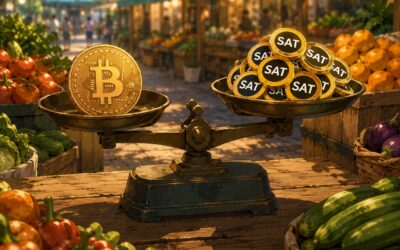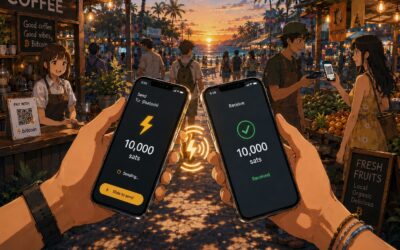

Throughout history, the value of money has never been determined by its material composition alone, but rather by the shared trust and social agreement that made the exchange of value possible. Bitcoin fits into this history spanning thousands of years—in a new, digital form. For the first time in history, Bitcoin enables millions of people to operate a shared financial network without central control.
We have now reached one of the most philosophically profound articles in this Bitcoin series.
The previous three articles focused more on:
This article, however, seeks to answer a much bigger question:
What is value itself?
If we ask someone today what gives Bitcoin its value, we often get the same question in return:
“But what’s behind it?”
That's a perfectly natural question.
After all, for centuries we have been accustomed to the idea that there is always something tangible behind money. Gold. The state. The economy. The central bank. Or at least an institution that guarantees its value.
Bitcoin, however, apparently has nothing of the sort.
It does not have a central bank.
It does not have a CEO.
It has no government issuer.
It does not have a central server.
That is precisely why many people believe that there is “nothing” behind Bitcoin.
But is that really the case?
Perhaps we shouldn't even be asking the question this way: "What's behind Bitcoin?", but rather:
“What has humanity considered valuable over the past several thousand years?”
The Long History of Exchange
For most of human history, money did not exist.
People simply traded what they had with one another.
Grain for animals.
Tools for food.
Salt the skin.
However, this barter trade posed a number of problems.
What happens if I have grain, but the other party doesn't need it?
What happens if we can't decide how much a goat is worth compared to a sack of wheat?
Humanity has therefore gradually sought out means of exchange that have become universally accepted.
From Shells to Gold
Throughout history, countless different objects have served as money.
Shells.
Salt.
Glass beads.
Copper.
Bronze.
Silver.
Gold.
None of these became valuable simply because they were “born to be money” in and of themselves.
They became a form of money because people collectively accepted them as a medium of exchange.
Gold proved to be particularly successful.
It was rare.
It was long-lasting.
It is difficult to counterfeit.
It's easy to divide.
And over the centuries, it became one of the most important symbols of that value.
But even in the case of gold, it was not the metal itself that provided its value.
Rather, it is the common agreement among people that they consider it valuable.
The paper that became more valuable than gold
Paper money appeared later.
At first glance, this may seem like a strange turn of events.
After all, the paper itself is hardly worth anything.
Still, we accept it as payment.
Why?
Because we trust the system that issued it.
Thus, a gradual shift can be observed in the history of money.
It is not the material that has become more valuable.
Rather, it is the mutual trust that underlies it.
The value of modern fiat currencies is no longer backed by gold.
Rather, it is the performance of the economy, the functioning of government institutions, and public trust.
Money is largely invisible these days
Many people believe that money today still consists mainly of banknotes.
In fact, the exact opposite is true.
A significant portion of the world's money no longer exists in physical form.
It is stored in computer databases.
On invoices.
In bank records.
In the form of digital balances.
Money, therefore, has long since ceased to be merely a physical object.
From this perspective, Bitcoin is not the first digital currency.
Rather, it is the first digital currency system that does not require a central registry.
What has changed with Bitcoin?
With the advent of Bitcoin, more than just a new form of currency was born.
Rather, it is a new kind of cooperation model.
Throughout history, every major monetary system has had a central figure behind it.
Empire.
Kingdom.
Bank.
Central Bank.
State.
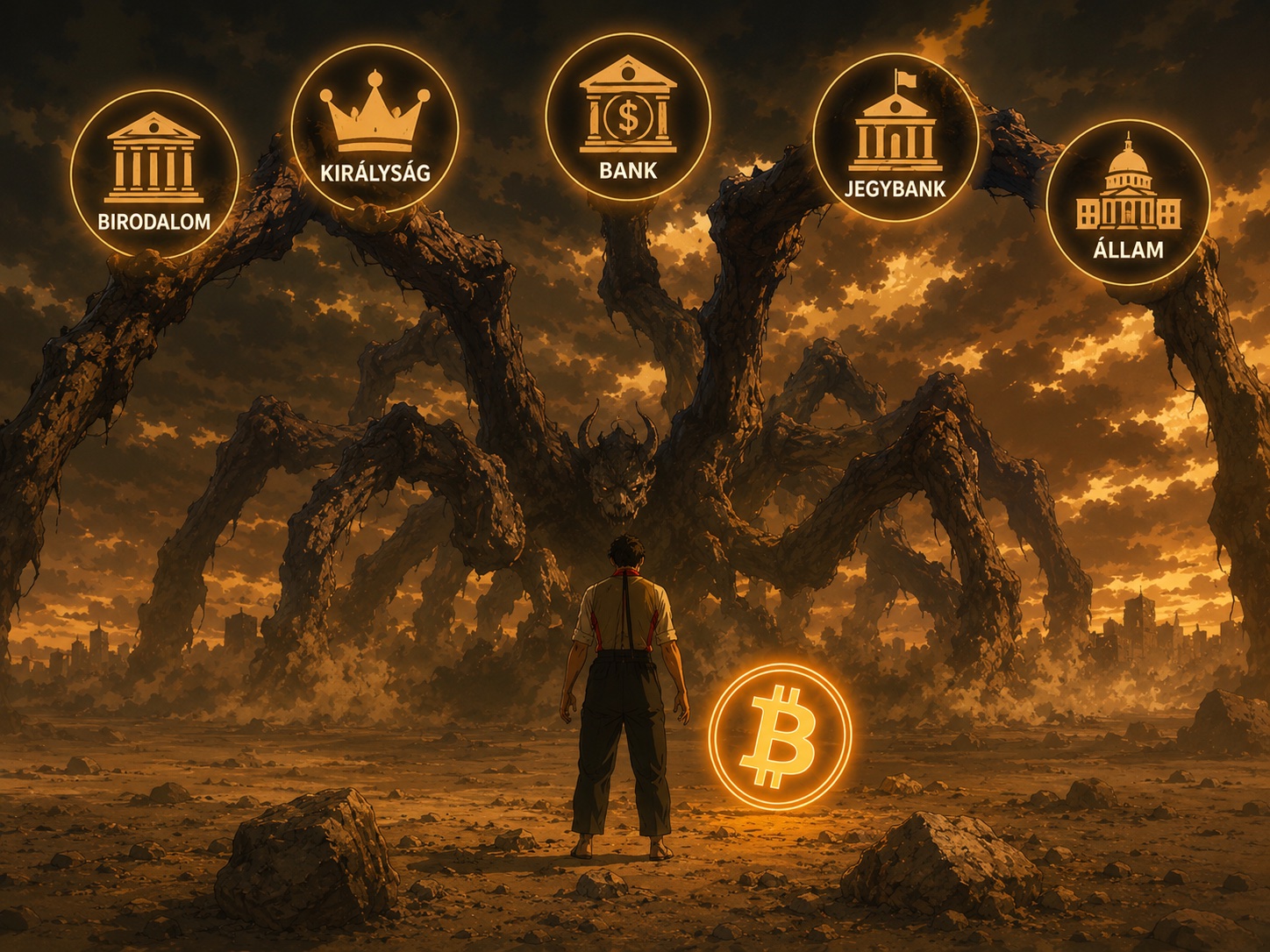
Bitcoin was the first to demonstrate that certain financial processes can function without a single central authority.
People don't change the rules as they please.
But the protocol itself.
Transactions are not monitored by a single institution.
Rather, they are independent nodes operating in various parts of the world.
This is what truly sets Bitcoin apart.
The value of Bitcoin lies in the network itself
Many people ask:
“What gives Bitcoin its value?”
This often elicits responses such as:
- mining,
- energy,
- the rarity,
- or the upper limit of 21 million.
These are indeed important qualities.
But on their own, they do not explain the essence of Bitcoin.
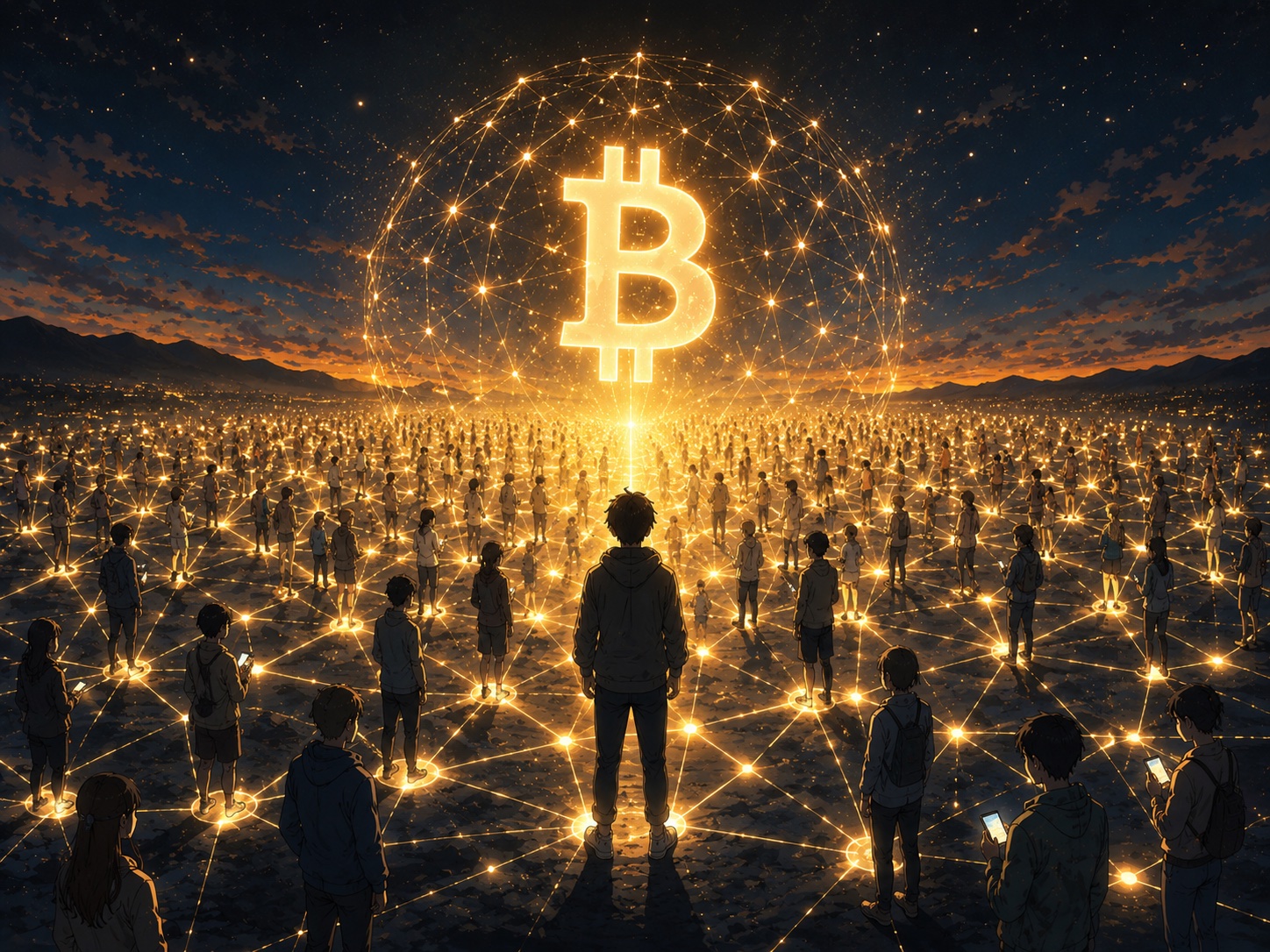
The true value of Bitcoin is the network itself.
The fact that millions of people accept the same rules.
They are running the same open-source code.
They are auditing the same general ledger.
And together, they ensure that no one can unilaterally change how the system works.
The value of Bitcoin isn't located in a building.
Not in a safe.
Not on a company's balance sheet.
Rather, it is in the global cooperation that keeps the network alive day after day.
More than just a payment system
For many people, Bitcoin is simply a digital currency.
Others view it as an investment.
But perhaps even more important is that it represents a new way of thinking.
Decentralization is not merely a technological solution.
Rather, it is the recognition that certain systems can function even when participants do not place their trust in a single central authority, but instead collectively monitor compliance with the rules.
This approach isn't just about money.
It's about trust.
About the collaboration.
On Responsibility.
And about how technology may be able to give these human relationships new forms.
Value can remain where it is created
In many cases, traditional financial systems operate through intermediaries.
Banks.
Clearing houses.
Payment service providers.
They play an important role in the economy, but their operations also entail costs.
One of Bitcoin's most interesting promises is precisely that, in certain situations, it enables a direct exchange of value between two parties.
This does not mean that all intermediaries will become unnecessary.
However, it creates a new opportunity for value to flow more directly from the person who created it to the person who receives it.
Peer-to-Peer.
Perhaps this is one of the most important social messages of decentralization.
From Physical Possessions to Intellectual Values
If we look back at the history of money, we can observe an interesting development.
Humanity first used physical objects.
Later, precious metals.
Then some paper.
And today, digital data.
Bitcoin is taking this process a step further.
It's not valuable just because you can hold it.
But rather because it embodies an open set of rules that anyone, anywhere in the world, can verify and use.
In this sense, Bitcoin is not merely digital money.
Rather, it is a technological infrastructure in which the most important value is not material resources, but rules, trust, and cooperation among people.
A symbol of the bond between people
The value of Bitcoin does not necessarily lie in the network itself, but rather in the relationships between people.
It's not the gold.
It's not the paper.
It's not the server.
It's not the energy.
But the a set of rules maintained by the community.
The responsibility has always been yours
If you take a closer look at today’s bureaucratic, monetary systems and keep your eyes open as you go about the world, you, too, will see the devastating impact on people’s lives and living conditions when they outsource and sacrifice their lives for the sake of convenience to a system that treats people as replaceable resources.
Debt Spiral -> Slavery Spanning Generations -> Dead end
Ask yourself this question:
„Do I want to continue being part of the problem, or do I want to be the solution?”
Bitcoin is a financial network of sovereign individuals, where responsibility and control remain with the individual.
„Bitcoin is a live network.”
Summary
Throughout human history, money has always changed.
From seashells to gold.
From gold to paper.
From paper to digital databases.
Bitcoin is the latest stage in this evolutionary process that spans thousands of years.
It doesn't mark the beginning of a new era simply because it's digital.
But rather because, for the first time, it enables millions of people to operate a shared financial network without central control.
Perhaps that is why it is no exaggeration to say:
The true value of Bitcoin does not lie in an object, an institution, or a country.
The true value of Bitcoin is the network itself.
This article perfectly illustrates how humanity's perception of value has changed over the past several thousand years—and Bitcoin is the latest chapter in this story.