

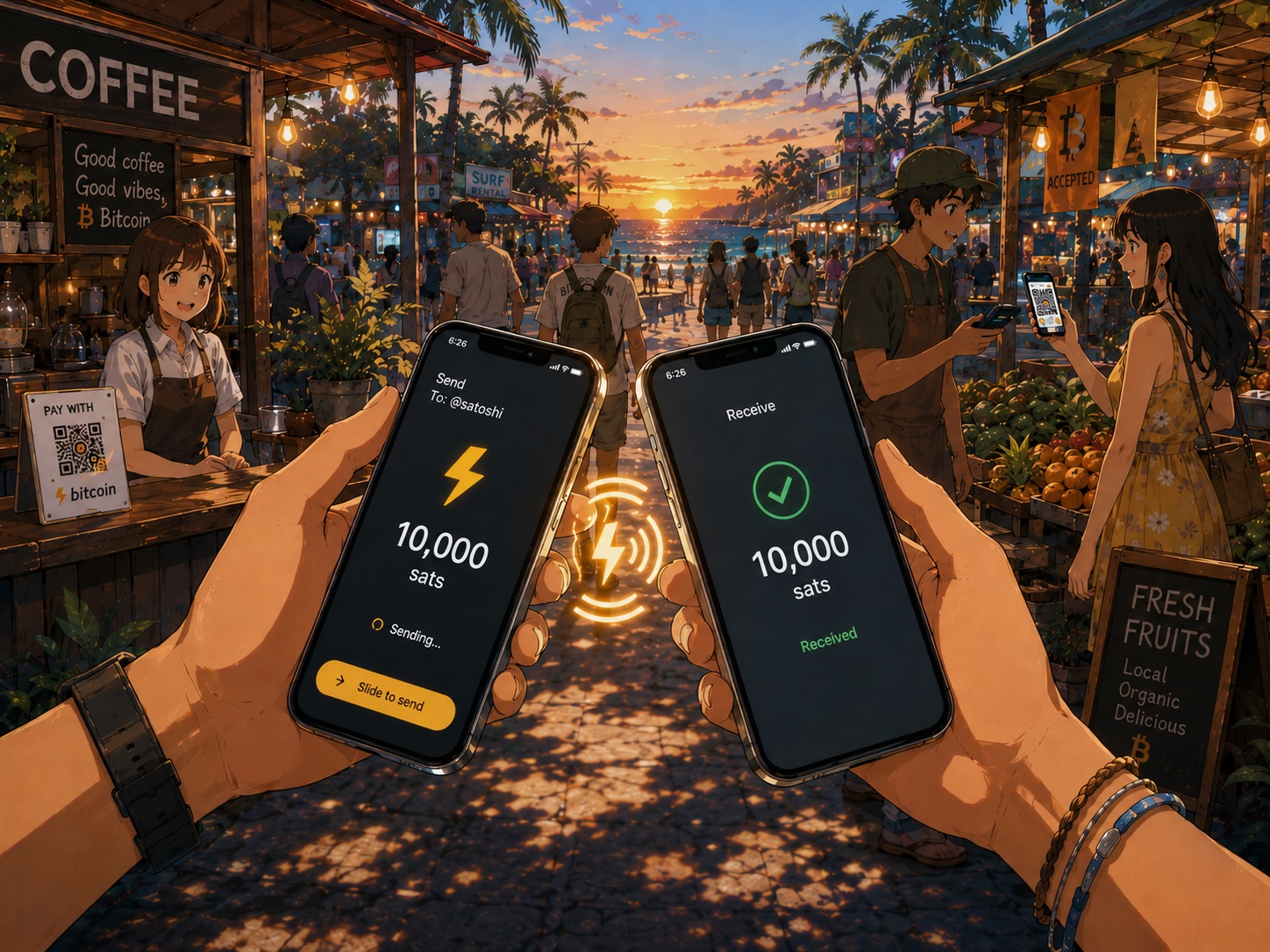
The Lightning Network has shown that Bitcoin can be used not only as a store of value but also as a means of payment for everyday transactions. To do this, however, we need something we always carry with us: a mobile phone and a suitable wallet app. Today, we can choose from a wide range of solutions, from the simplest Lightning wallets through to apps that run their own nodes, right up to digital cash that works with NFC and even without an internet connection.
One of the interesting twists in the history of Bitcoin is that, whilst in the early years carrying out a transaction still required technical knowledge, today we can send satoshis to the other side of the world with just a few taps.
The about Lightning Network have already looked at the technical background to this in a previous article. Now we’ll take a look at the tools themselves.
Which mobile apps can we use today to send, receive or spend satoshis?
And just as important:
Which portfolio is for whom?
Not all Lightning wallets are the same
Before we look at the applications, it is worth understanding a fundamental difference.
From a user experience perspective, all of them may be capable of processing fast Bitcoin payments; however, technically, very different solutions may be at work behind the scenes.
The following exist:
custodial wallets, where a service provider manages our Bitcoin;
self-custodial wallets, where we are in control of our own keys;
wallets associated with your own Lightning node, where we gain even greater control over our Lightning infrastructure;
as well as an increasing number of Cashu eCash app, which links the Lightning Network to digital cash.
This is not merely a technical detail.
The various solutions involve different trade-offs between convenience, self-determination, data protection and technical complexity between.
So there isn’t just one ‘best Lightning wallet’.
The right tool depends on what you want to use it for.
1. Blink Wallet – Bitcoin Beach in our pockets
The Blink Wallet occupies a special place within the Lightning ecosystem.
Formerly known as Bitcoin Beach Wallet, it emerged in 2020 from the everyday needs of the community in El Zonte, El Salvador. It wasn’t conceived as a theoretical experiment: real people needed a simple tool, which enabled them to use Bitcoin in shops, at markets and amongst themselves.
In June 2026, Blink took another significant step forward: it introduced non-custodial accounts. Alongside the traditional custodial Lightning mode, it now also offers an option where users retain control of their own keys. The non-custodial mode is underpinned by the Bitcoin-based Spark protocol, whilst the app remains capable of handling Lightning payments. In some regions, Blink is currently phasing out custodial accounts.
Type: deposited or self-managed, depending on the region
Platform: Android, iOS
Lightning: yes
Lightning Address: yes
Recommended for: for beginners and for everyday payments
We’ve already produced a separate, detailed guide to Blink, which takes you through everything from installation to your first Lightning purchase.
Blink Wallet – A Lightning wallet born from the Bitcoin Beach community
2. Satoshi’s Wallet – when simplicity comes first
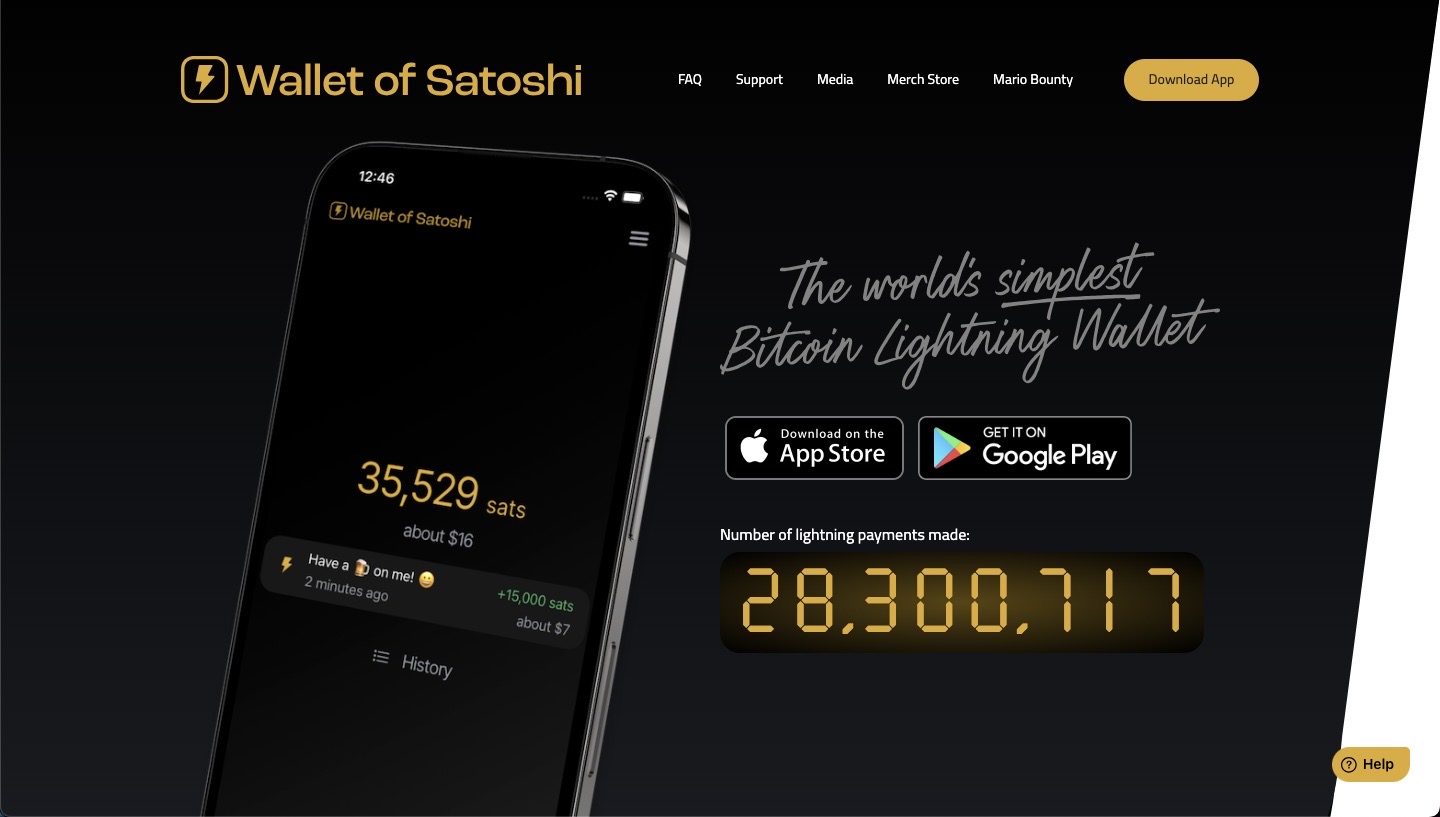
The Wallet of Satoshi perhaps one of the best-known Lightning wallets for mobiles.
One reason for its popularity is extremely simple:
ready to use almost straight away.
We’ll install it, get it up and running, and in a few moments you’ll be able to send or receive Lightning payments.
One important change is that the Wallet of Satoshi now two types of model offers. The self-custody mode is available globally, whilst the custodial mode managed by the service provider is only available in certain regions. In the self-custody version, the user manages their own private keys.
The app also provides a Lightning address, which is an easy-to-remember payment identifier similar to an email address.
Type: self-directed or – where available – custodial
Platform: Android, iOS
Lightning: yes
Lightning Address: yes
Recommended for: for beginners who want a simple Lightning experience
The strength of the Wallet of Satoshi does not lie in the fact that it puts a hundred technical controls in the user’s hands.
But rather in the fact that he tries to hide these things from her.
3. ZEUS – Lightning for those who want more control
If the Wallet of Satoshi represents one extreme of simplicity, then the ZEUS Wallet takes us much closer to the technical intricacies of Lightning.
ZEUS was launched in 2019, originally to allow users to manage their own Lightning node from their mobile phones. Since then, it has evolved into a fully-fledged, self-custodial Bitcoin and Lightning wallet.
Today’s ZEUS offers a range of usage levels.
We can start off simply, then move on to a directly to the LND Lightning node running on the phone, alternatively, we can connect the app to our own LND or Core Lightning node running elsewhere. The current version also offers an NFC Tap-to-Pay option.
Type: self-commissioned
Platform: Android, iOS
Lightning: yes
My own node: yes
NFC: yes
Recommended for: for intermediate and advanced Bitcoin users
This is closer to one of Bitcoin’s most important principles:
Don’t just own your money – make sure you’re in control of your infrastructure too.
4. Strike – Bitcoin and traditional money in one app
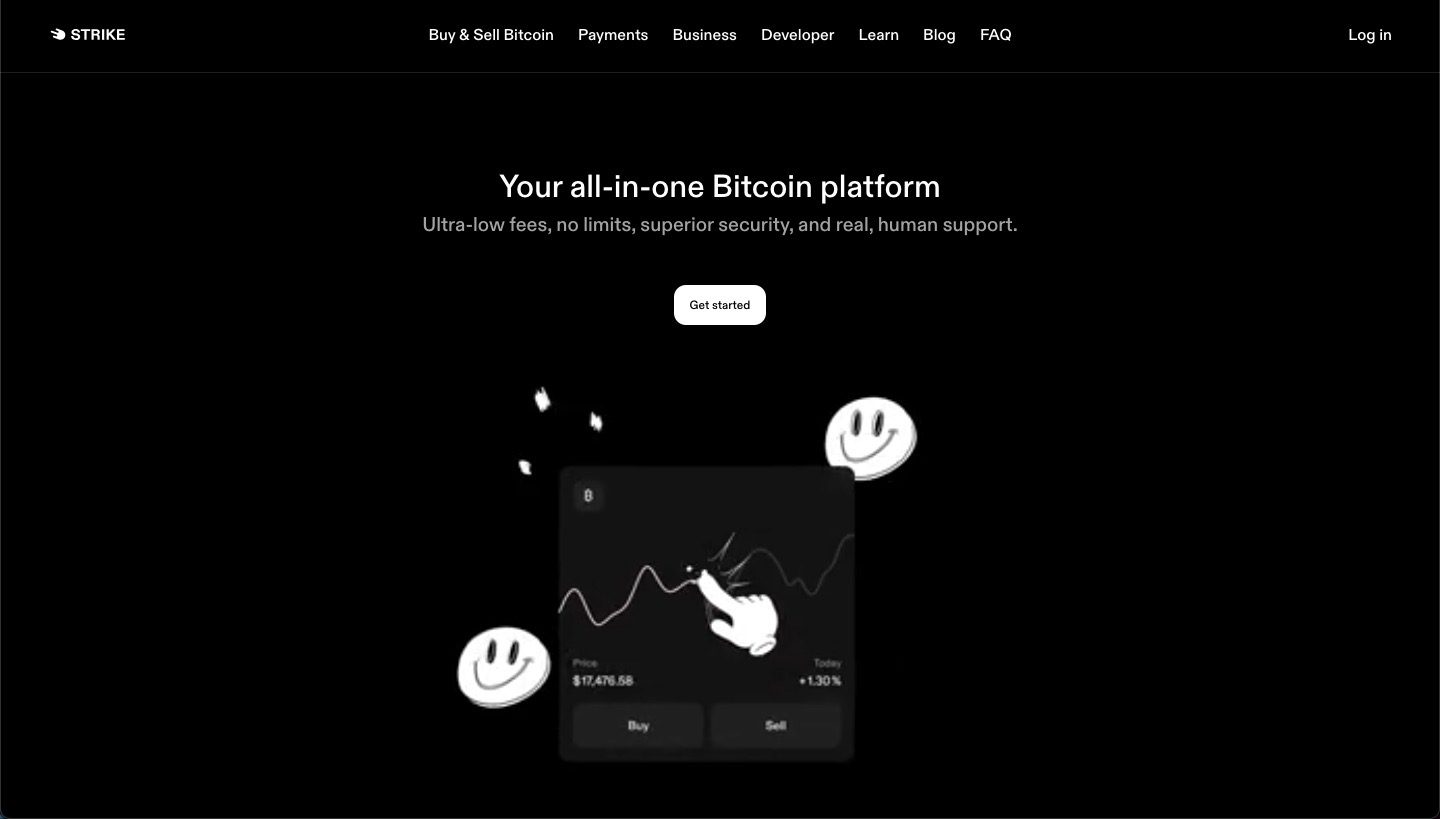
The Strike is a slightly different category.
It was not designed merely as a Lightning wallet, but as a Bitcoin-based payment and financial app.
Through Strike, you can send and receive Bitcoin on the Lightning Network, use a Lightning address, and, in supported regions, initiate payments using traditional currency that utilise the Lightning Network in the background. The availability and features of the service may vary by country.
Type: service-based/custodial application
Platform: Android, iOS
Lightning: yes
Fiat integration: yes
Lightning Address: yes
Recommended for: for those looking for a bridge between traditional money and Bitcoin
Strike is interesting because it shows that the Lightning doesn’t necessarily have to be visible.
As far as the user is concerned, all that happens is that sends a value.
Meanwhile, Lightning is doing the work in the background.
5. Alby Go – the wallet that can be linked to your own Lightning connection
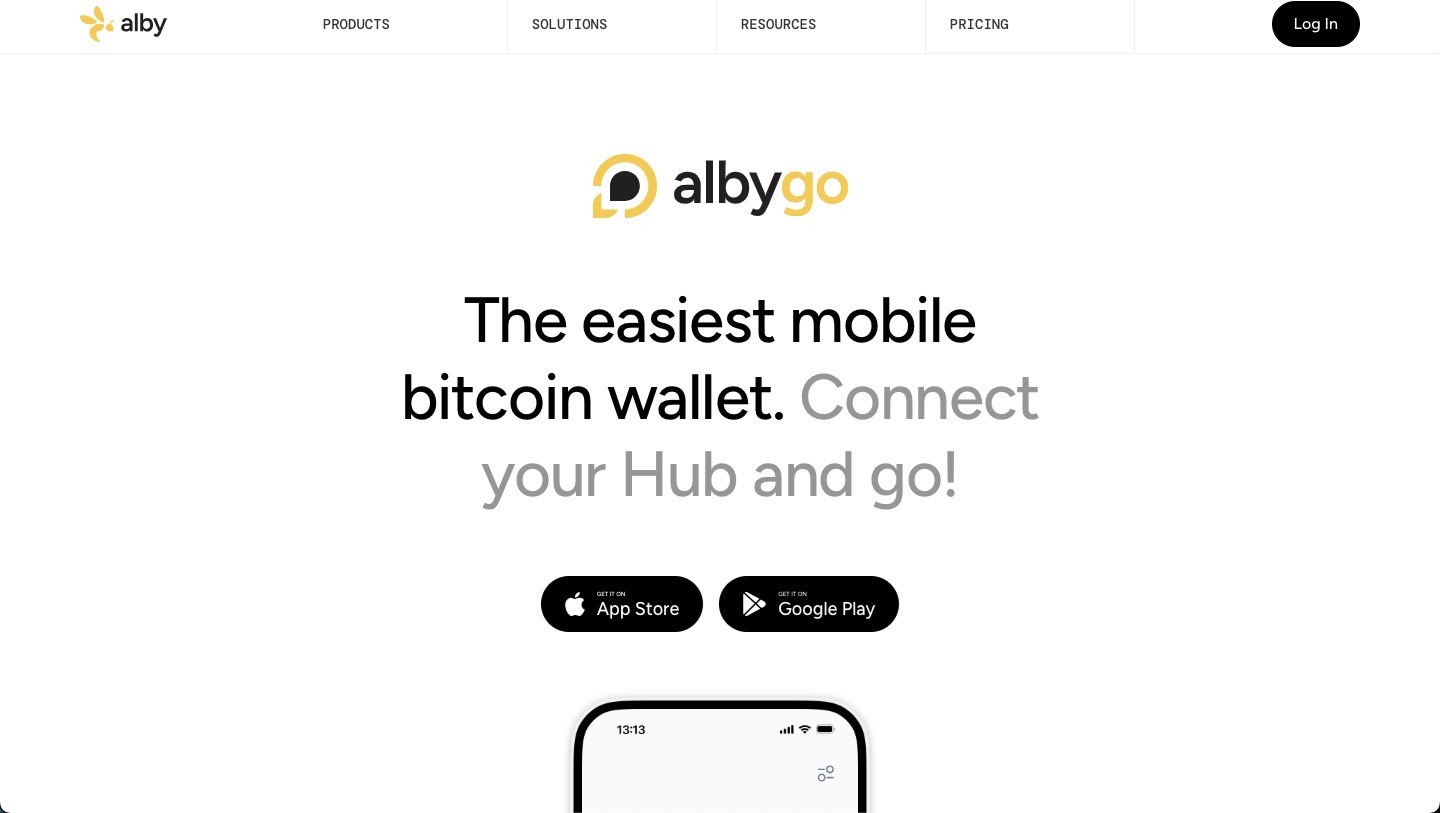
The Alby Go follows a different philosophy.
The app is a lightweight mobile Lightning interface that connects to Alby Hub or other, Nostr Wallet Connect (NWC) is linked to a compatible wallet service.
This means that the phone app itself is not necessarily the entire Lightning infrastructure.
Rather an mobile remote control for our own Bitcoin payment system.
Type: NWC client
Platform: Android, iOS
Lightning: yes
Alby Hub integration: yes
Recommended for: for those who want to use their own or NWC-compatible Lightning wallpapers on their mobile
This model is interesting because it separates the financial infrastructure from its user interface.
The phone may be lost or replaced.
Our Lightning system, which runs in the background, can still remain in place.
And this is where the next generation begins: Cashu eCash
With the following applications, we are crossing an important technological threshold.
The Minibits, Cashu.me and Macadamia are not Lightning wallets in the traditional sense.
Cashu eCash wallets.
Cashu is a Chaumian eCash system based on Bitcoin and Lightning. Users hold digital carrier tokens, whilst the mint that issues them holds the underlying satoshis.
That is why there is an important compromise here:
We have to trust the mint to convert the eCash back into Bitcoin at a later date.
In return, we gain features that are particularly interesting from the perspective of everyday digital cash: there is no need for a traditional user account, the tokens can be stored locally, and the eCash layer even allows for value transfers outside the network.
6. Minibits – digital cash in your pocket

The Minibits one of the most interesting Cashu-based mobile apps.
The wallet makes it easy to transfer funds between the Lightning Network and Cashu eCash.
It supports the NFC Tap-to-Pay and also enables contactless value transfer between two Minibits devices. Due to the nature of Cashu tokens, transfer methods are also possible where the payer does not need to be online at that particular moment.
Type: Cashu eCash
Lightning passage: yes
NFC: yes
Nostr/NWC: yes
Offline options: yes
Recommended for: for users who like to experiment and are interested in data protection
Here, we’re really starting to get close to the experience of as if we would exchange digital banknotes with one another.
7. Cashu.me – digital cash, even from your browser
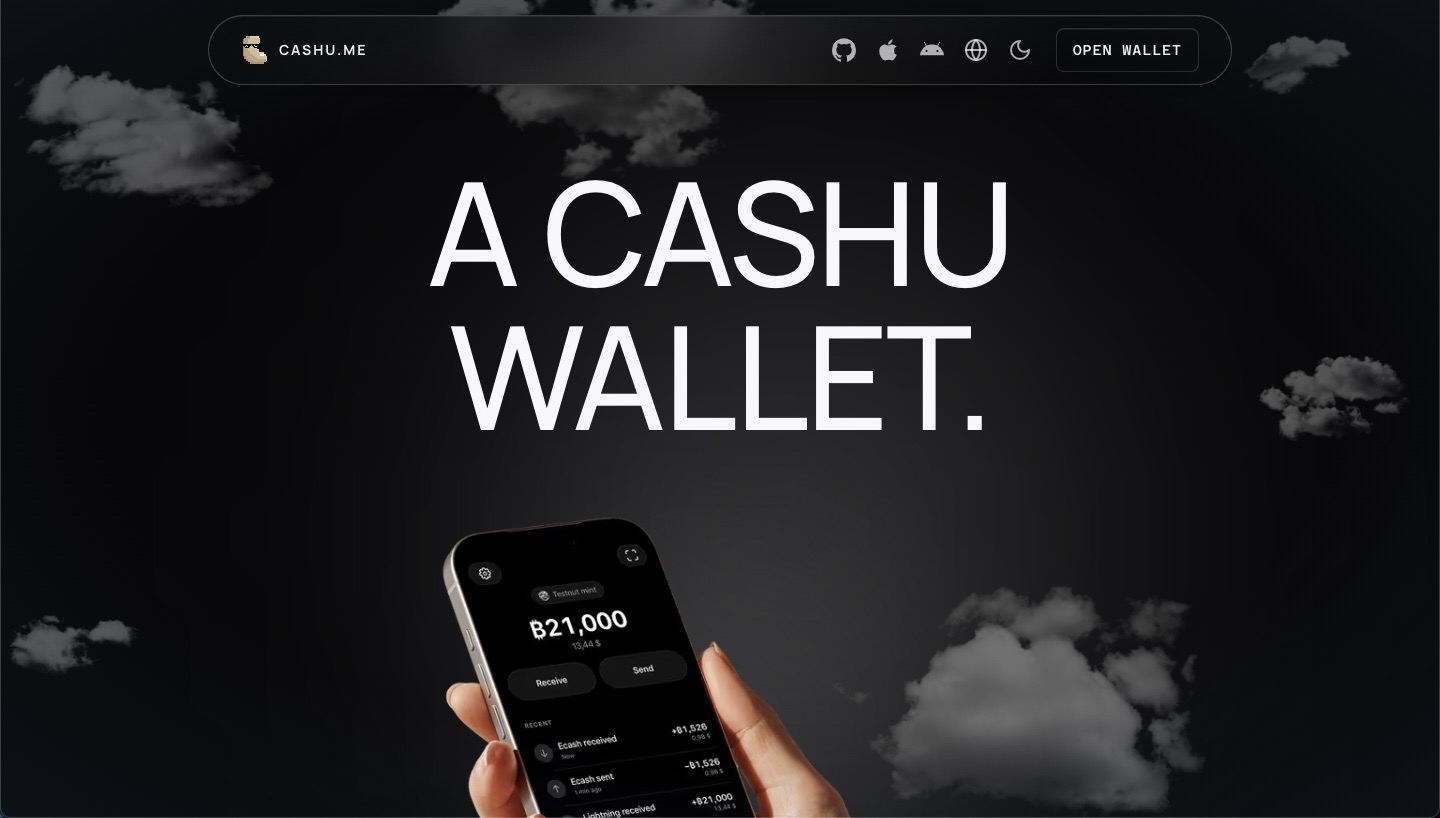
The Cashu.me also Cashu-based eCash wallet.
The current version can be used both as a mobile app and via a web browser. There is no traditional user account or login process; the eCash is stored on the user’s device. It can also be converted back to a Lightning address.
The NFC feature is particularly interesting: Cashu eCash tokens can be transferred directly to another device with a single tap.
Type: Cashu eCash
Mobil/web: yes
Lightning passage: yes
NFC Tap-to-Pay: yes
An account is required: no
Recommended for: for those who would like to experience how digital cash works
8. Numo – when your phone becomes a Bitcoin terminal

The Numo stands out a bit from the rest, because primarily payment app for retailers.
The idea is extremely simple:
Tap your phone there – and pay.
An NFC-enabled Android phone can, in itself, become a Bitcoin payment terminal. Numo supports Lightning and Cashu eCash, and eCash payments can work even with a poor or non-existent internet connection, and can be synchronised later. The system can also be integrated with BTCPay Server.
Type: Bitcoin/Cashu POS for retailers
Platform: Android
Lightning: yes
Cashu: yes
NFC: yes
Offline eCash payment: yes
Recommended for: for retailers, producers, events and businesses that accept Bitcoin
This is a particularly interesting area.
Because what’s happening here is no longer Bitcoin trying to fit into the world of card payment terminals.
The mobile phone itself becomes a payment terminal.
9. Macadamia – Cashu natively on iPhone
The Macadamia open-source Cashu eCash wallet, designed specifically for iOS.
The developers’ aim is to make digital payments as natural as handing someone cash.
The system uses blind signatures, and the Cashu token acts as a digital carrier. The wallet is also capable of handling Lightning payments via the Cashu infrastructure.
Macadamia is currently still in beta, so even its own developers recommend testing it with small amounts.
Type: Cashu eCash
Platform: iOS
Lightning passage: yes
Open source: yes
Status: beta
Recommended for: for iPhone users and those experimenting with private digital cash
An important rule: your mobile payment wallet is not your safe
Whichever app you choose, it’s worth following the same basic principle that I emphasised when introducing Blink Wallet:
Think of your everyday Lightning wallet as the wallet in your pocket – not as a safe for your savings.
If we plan to spend 20,000 satoshis over the next few days or weeks, there is no particular reason to hold several million satoshis in the same mobile payment app.
We assume provider risk in the custodial portfolio.
With a self-contained mobile wallet, the phone itself is a device connected to the internet.
In the case of Cashu, there is an additional sample risk: Cashu’s documentation explicitly warns that the sample holds the underlying satoshis, so you should only use a sample you trust, and even then, it is advisable to work with small amounts.
Long-term Bitcoin savings continue to be based on a different security model.
The Lightning wallet is your wallet.
A hardware wallet can act as your safe.
A separate overview has already been produced on reliable self-custody Bitcoin wallets, which covers both software and hardware Bitcoin wallets.
Which one should I choose?
If you want to try out Lightning payments as simply as possible, the Blink vagy Wallet of Satoshi could be a good starting point.
If we want greater autonomy and our own Lightning infrastructure, the ZEUS offers a whole new level of control.
If the interoperability between traditional money and Bitcoin is important, the Strike an interesting choice.
If you want to use your own Lightning wallpaper via a user-friendly mobile interface, the Alby Go philosophy may be appealing.
And if you’re interested in NFC, data protection, eCash or even partially offline value transfer, then Minibits, Cashu.me, Numo and Macadamia show the direction in which digital cash could develop further.
So these are not simply apps from different brands.
Various ideas on how we can use Bitcoin in everyday life.
The true significance of Lightning wallets
Technology only becomes truly important when it ceases to appear as technology.
Nor do we perceive the internet as TCP/IP packets.
We simply send a message.
Something similar happens with the Lightning Network as well.
Behind the scenes, nodes, payment channels, liquidity, routing, cryptography and various protocols may be at work.
However, this is all the user can see:
Send.
Receive.
Tap.
Paid.
And perhaps this is precisely where the original vision for Bitcoin begins to come to fruition.
Not when everyone understands how the Lightning Network works from a technical point of view.
But rather when you no longer need to understand it in order to use it.
An app in our pocket – backed by a global payment network
In just a few years, we’ve reached a point where we can send satoshis to a friend using an ordinary smartphone, receive payments via a Lightning address, make purchases by scanning a QR code, tap two devices together using NFC, or even transfer digital value using certain eCash solutions, even with a poor internet connection.
The direction of progress is less and less about “How do we use Bitcoin?”
It’s much more about:
How can using Bitcoin become so second nature that we no longer even notice the technology behind it?
If this succeeds, the Lightning Network’s most significant achievement may not be that it has made Bitcoin payments faster.
But the fact is that the took the concept of peer-to-peer electronic cash out of the technical communities and into people’s pockets.