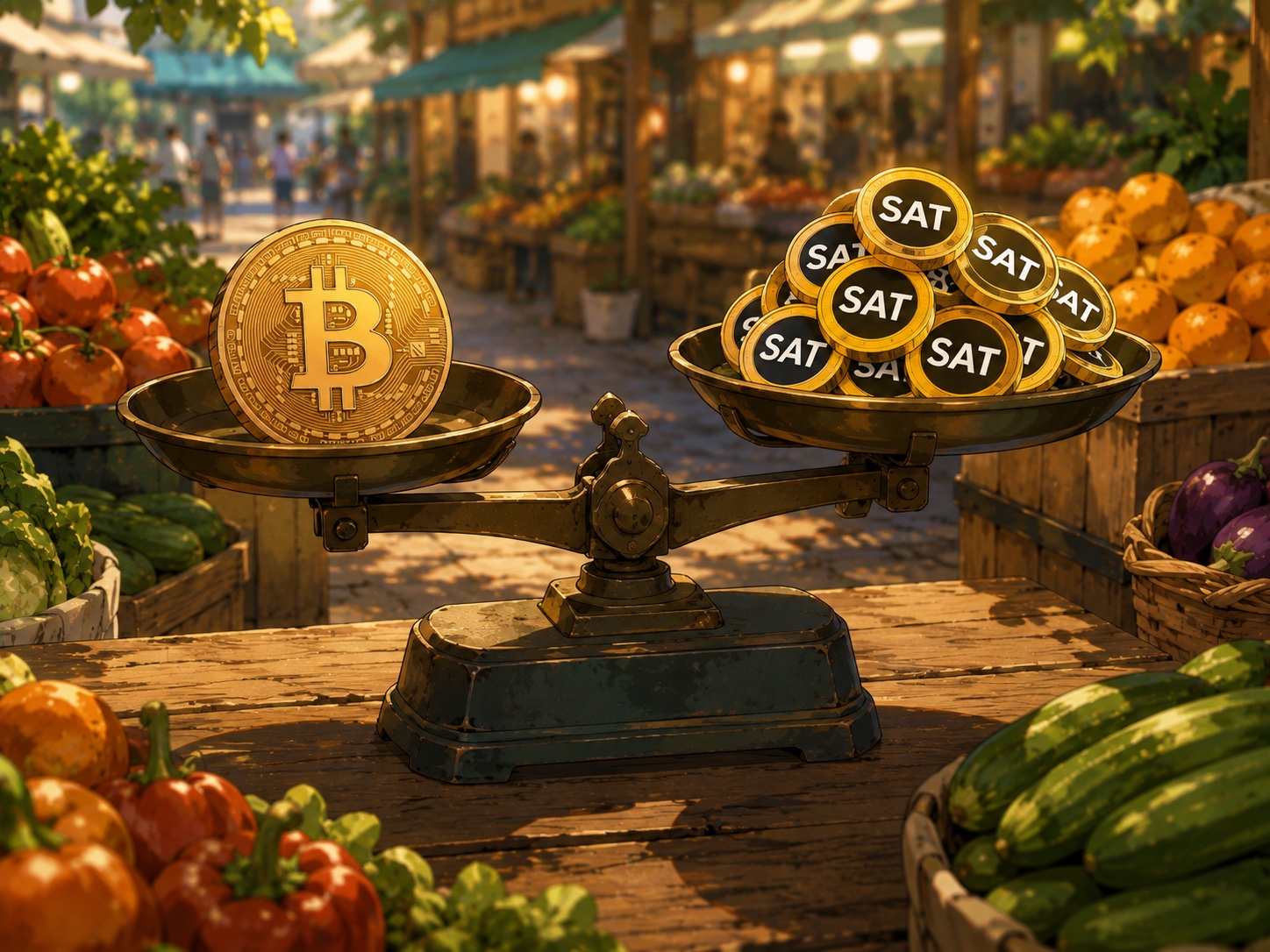
Bitcoin isn’t only used in whole units. Just as we break a kilometre down into metres, or a kilogramme into grammes, Bitcoin can also be divided into smaller parts. The smallest unit is the satoshi, or SAT for short.
Most people still regard Bitcoin as an extremely expensive digital asset.
One reason for this is that in the news and on the stock markets, it is almost always the total 1 BTC exchange rate is shown. When someone sees that a bitcoin costs tens of millions of forints, they might easily think that Bitcoin is now out of his reach.
The reality, however, is quite different.
Not new money, but a new perspective
Many people first come across satoshi as if it were a new cryptocurrency.
But that’s not the case at all.
Just as nobody thinks that a centimetre is a different unit of length from a metre, in the same way a satoshi is nothing other than the Bitcoin smallest unit.
The system is the same.
It’s the same network.
The ownership is the same.
It is only the unit of measurement that changes.
And sometimes a new unit of measurement brings with it a completely new way of thinking.
A satoshi is the same as a Bitcoin, just a different unit of measurement
Many people believe that Bitcoin and satoshi are two different things.
In fact, these are two different units of measurement within the same system.
For example:
- 1 metre = 100 centimetres
- 1 kilogram = 1,000 grams
- 1 Bitcoin = 100 000 000 satoshi
Therefore, when someone has 50,000 SAT, they still own bitcoin, just expressed in smaller units.
The Psychology of Satoshi
This is an interesting human phenomenon.
Let’s imagine the following two sentences.
0,001 BTC
or
100 000 SAT
Mathematically, the two are exactly the same.
Yet it evokes a completely different feeling.
Most people instinctively find it easier to relate to whole numbers.
That is why it becomes natural to think in terms of satoshiba.
It’s not because it’s worth more.
But because it is easier to understand.
Our relationship with money is also changing
In the traditional financial system, we are used to money being expressed in ‘large units’.
Forint.
Euro.
Dollar.
Bitcoin, on the other hand, is inherently infinitely flexible.
It allows us to move even very small values with the same ease.
This is particularly important in the internet age.
A newspaper article.
A video.
A photograph.
A blog post.
A song.
A work of art.
These are all forms of digital value for which even a few hundred or a few thousand satoshis might be enough.
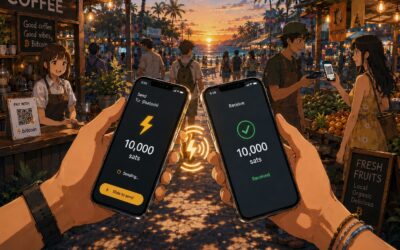
The Lightning Network makes exactly this possible.
The Lightning Network also uses satoshis for calculations
A significant proportion of payments made on the Bitcoin Lightning Network are made in satoshis.
If anyone:
- buys coffee,
- sends a tip,
- pays for an online service,
- or transfers a few hundred forints’ worth of Bitcoin,
in which case they often see the amount not in bitcoins, but in satoshis.
This makes handling smaller amounts easier and more natural.
It’s also easier to keep track of your savings
Many people do not set themselves the goal of one day owning a whole bitcoin.
Instead, they are gradually accumulating satoshis.
For example:
- 10 000 SAT
- 100 000 SAT
- 500 000 SAT
- 1 000 000 SAT
This approach is more motivating for many people because it involves smaller, more achievable goals.
Instead of the ‘Wholecoiner’ dream
There is a well-known expression in the Bitcoin community.
Wholecoiner.
This means that someone must have at least 1 BTC owner.
Many people regard this as a sort of milestone.
At the same time, it is important to understand that this is neither the purpose nor a prerequisite for using Bitcoin.
The value of Bitcoin does not depend on whether someone owns a whole unit.
Someone might have a few thousand satoshis and still be part of the same decentralised financial network.
Thinking in terms of satoshiba is, for this very reason, liberating.
It does not draw attention to the shortfall.
But rather on what we already have at our disposal.
It’s not that Bitcoin is expensive; it’s just that we’re looking at it in the wrong unit of measurement
When someone says:
“Bitcoin is too expensive.”
in which case they are often actually thinking that the price of a single bitcoin is high.
Yet nobody is forcing us to buy a whole bitcoin.
Bitcoin can be divided in exactly the same way as any other form of money.
Just as nobody buys a whole kilogram of flour or a whole litre of fuel, you can buy exactly the amount of Bitcoin you need.
In future, we are likely to come across prices quoted in satoshi more and more often
As the use of Bitcoin becomes increasingly widespread, it is expected that more and more apps, wallets and merchants will display prices in satoshis.
This can be particularly useful for smaller, day-to-day payments.
A satoshi represents the same value as a very small fraction of a bitcoin – just in a more manageable form.
We are all Satoshi
The satoshi isn’t important simply because it’s a smaller unit.
But because it helps to dispel the notion that Bitcoin is only for the very wealthy.
When someone first says:
“I have 250,000 satoshis.”
then you no longer feel that ‘I don’t have a single bitcoin’, but rather that you are already part of this system.
The slogan ‘We are all Satoshi’ expresses the idea that the creator of Bitcoin, Satoshi Nakamoto not a single individual, but the community and the decentralised concept. This idea shows that anyone can contribute to the system.
Summary
Thinking in terms of satoshis does not change the value of Bitcoin, but it can change the way we view Bitcoin.
Rather than focusing on a single unit that seems extremely expensive, it is better to look at Bitcoin’s smallest unit. This brings the technology closer to everyday use and helps us realise that Bitcoin is not only available in whole units.
Whether we hold a few hundred or several million satoshis, we are all part of the same open and decentralised financial system. This perspective makes Bitcoin more understandable and accessible to many people.