Throughout history, the value of money has never been determined by its material composition alone, but rather by shared trust and social...


Throughout history, the value of money has never been determined by its material composition alone, but rather by shared trust and social...

Bitcoin didn't just appear out of nowhere in 2008; it was the result of a long intellectual evolution. And perhaps this is the point...

One of the most important figures in this story is a computer scientist and cryptographer of Hungarian descent: Nick Szabó. Bitcoin...

The current state of the crypto industry is like joining the internet in 1998. Those who are present now are part of an "early party" that could grow to be huge later.

The general explanation of blockchain is that it seems to be an all-encompassing technology, but it is actually more of an umbrella term for various digital record-keeping systems. Some myths make it sound magical, but the truth is a bit more convoluted. Let's break it down more simply!

The decentralised economy is no longer a distant vision - it is here, transforming the way we trade, govern and build without dependence on traditional systems.
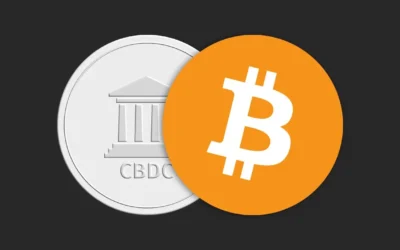
In an authoritarian system, CBDCs can be used as a weapon against dissenters, further undermining people's economic sovereignty and contradicting the purpose of most digital currencies. Bitcoin, however, offers a decentralised alternative - one where individuals retain control over their own wealth.

Blockchain-based network states are emerging as digital nations that challenge traditional governance by offering customisable, opt-in communities based on shared values rather than geographical boundaries. It is about the power of individuals to choose their own path, build communities and step outside traditional systems of governance.

The Exodus wallet is a self-service cryptocurrency wallet designed to give people financial autonomy.

One of President Bukele's New Year's resolutions is to install Bitcoin nodes in every home in El Salvador. This initiative aims to accelerate the development of a decentralised nation-state model in the country.
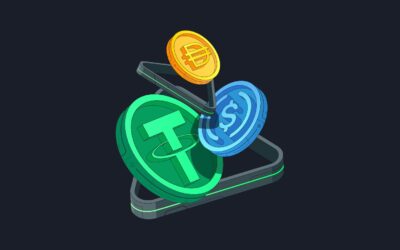
The purpose of stablecoins is to maintain price stability and bridge the gap between fiat money and cryptocurrencies. They are linked to traditional assets, such as paper money or gold, making them a relatively less volatile alternative than typical cryptocurrencies. Promising faster transactions and lower costs, stablecoins are an alternative to traditional banking solutions.

With the Ethereum upgrade starting in 2025, the network will be faster, more scalable and easier to use. It will also change the way users interact with applications on the chain every day.