

Hungary's current financial situation is characterized by both visible debt and a hidden, slow devaluation caused by steadily rising inflation. If we do not understand how both mechanisms work—the interplay between the state, the banking system, and the deterioration of money—we can easily fall into a trap as "economic slaves" whose every move leads to credit, debt, and a future of devaluation. Bitcoin, on the other hand, is an excellent digital store of value and a stable asset that protects against constantly inflating FIAT money.
Most people grow up thinking that money is a natural resource. It exists because it exists. We use it because we need to. Few people ask: who creates it, under what conditions, and who profits from its existence?
The debt clock, an invisible burden that affects us all
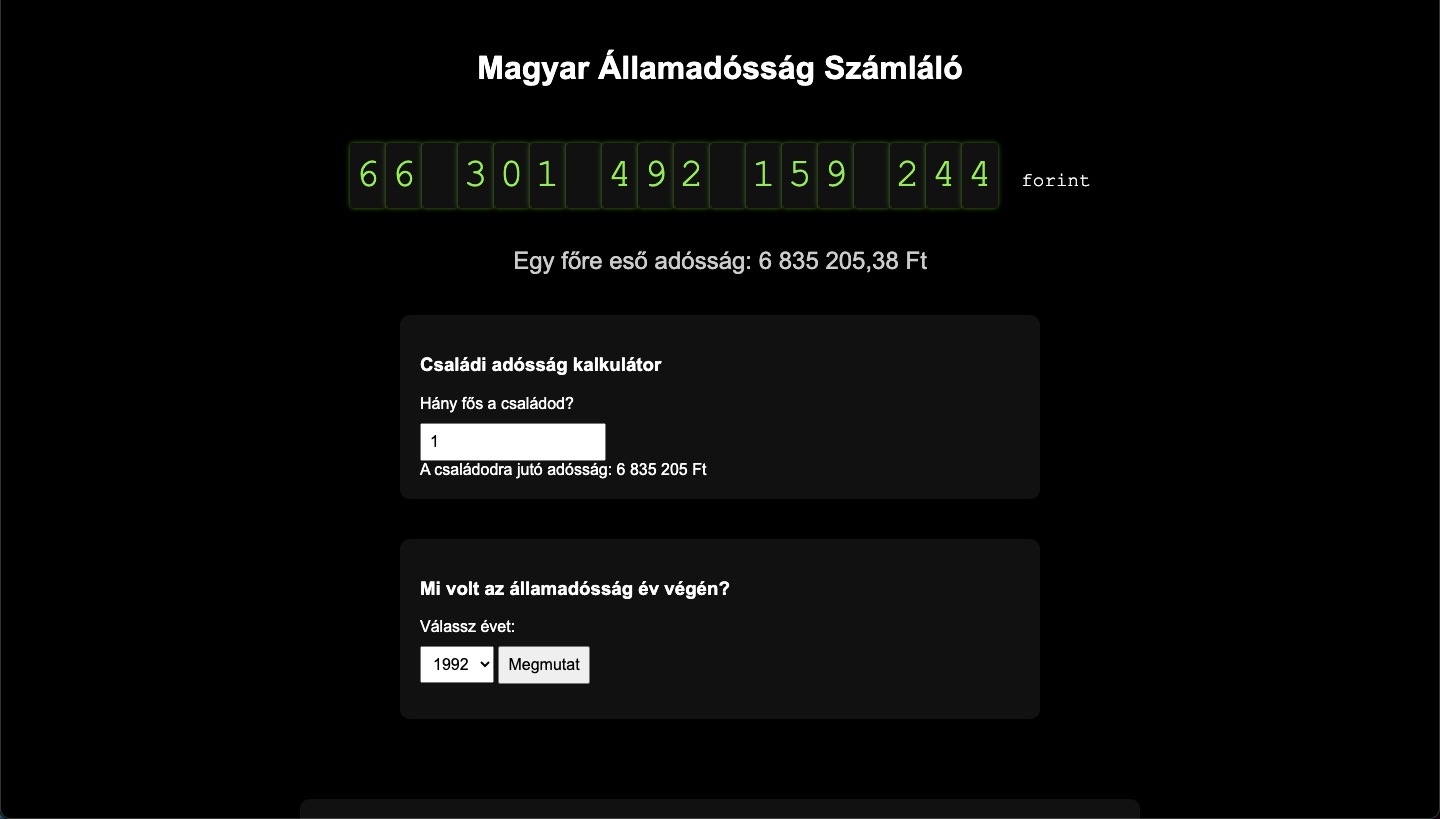
Our country's national debt is constantly growing — in real time, an insurmountable "debt clock" shows tens of thousands of billions of forints. According to the real-time debt clock, in 2025 the amount already exceeded 63,000–65,000 billion forints — which per capita more than 6–6.7 million forints in "invisible debt" per Hungarian citizen. This growing debt is not just a number: we are mortgaging our future income to finance the current budget deficit. The debt spiral thus represents an economic challenge that is passed on from generation to generation—in fact, a structural difficulty that we do not see, but which determines the financing of everyday public services, investments, and the framework of our livelihoods.
Why is this a problem?
- The burden on future generations: Public debt will not disappear – both the current and future generations will have to bear it.
- Increase in financing costs: Interest expenses account for an increasingly large share of the budget.
- Invisible effects: Borrowing and spiraling debt often remain hidden in everyday life, while we hear about austerity measures, spending cuts, or tax increases.
The global financial system: a network based on credit
Public debt is only a small part of a broader, global credit-based financial system. Modern banking system A significant portion of money is created as credit, and central bank decisions—interest rates, money supply—affect how much "money" there is in the economy. This system is often not transparent; rather, it is a invisible net which determines the value of money, the availability of credit, and interest rates. In this network, the concept of debt is linked to inflation, interest payments, and the financing of investments.
Banks create money out of thin air and then "lend" it to the public as credit.
- The FIAT monetary system has no physical backing, such as gold or other precious metals.
- Money creation is controlled by central banks and large banking groups, often with little transparency or accountability.
- Money is essentially credit – and when we take out a loan (whether at the state or private level), we are effectively "selling" our future income for the present.
The “credit“ word itself comes from the Latin credere (to believe), which perfectly highlights the illusory nature of money.
The paradox of credit money
The current global monetary system is largely based on debt-based credit money.
This means that the vast majority of money does not represent existing value, but rather a promise of future repayment—with interest.
This is where the internal contradiction of the system becomes apparent:
the interest is never issued, yet everyone is obliged to pay it.
Mathematically, this means that, at the level of society as a whole, debt is always greater than the amount of money available.
This is not a moral issue. It's arithmetic.
Since there is no physical collateral or real exchange of value behind it, this process is essentially equivalent to counterfeiting money. The paper and plastic banknotes we carry in our pockets are just decorative pieces of paper.
Inflation: the hidden "theft" that steals your wealth day by day
If debt is one weapon that binds generations, inflation is another—an almost imperceptible yet constantly active force that steals the value of your money.
What is inflation? Inflation means that you can buy fewer goods and services for the same amount of money—in other words, the purchasing power of money decreases.
This phenomenon is even more noticeable when food prices, utility costs, and basic living expenses are constantly rising—while your salary fails to keep pace.
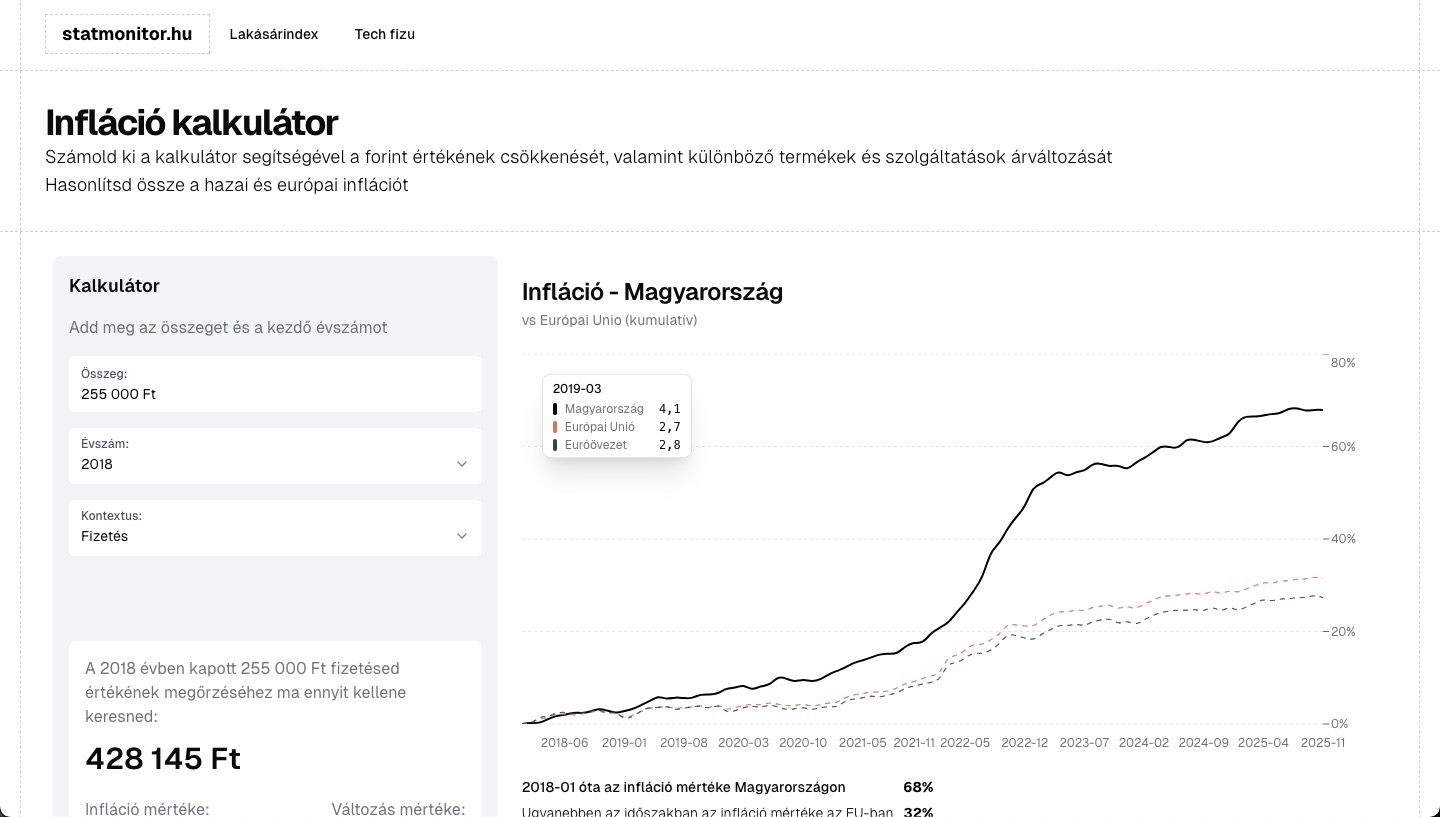
This phenomenon is essentially a hidden, automatic transfer of wealth from producers and consumers to the state, which many people do not immediately notice.
How does rising inflation steal the value of our everyday lives?
According to many economic thinkers, high and prolonged inflation a hidden tax or "free robbery" against consumers: when the value of money decreases, your savings are worth less, real wages fall, and everyday living becomes more difficult. In economics, it is often said that this is like a "invisible tax"because even though you are not paying directly, you are losing money in terms of purchasing power.
Common denominator: credit, debt, and inflation — working against your money
When the state takes out a loan, it is not just a matter of numbers—it also determines future budgets and economic policy. If inflation rises at the same time, then the real value (what your money is really worth) decreases. Together, these dynamics:
- They increase the burden of public debt,
- They reduce the purchasing power of money,
- They weaken the value of savings,
and all this through mechanisms that are difficult to understand or control in everyday life.
This is the kind of "slavery" that does not keep people in chains, but rather in economic conditions that force individuals and communities into a spiral of constant debt and devaluation.
The real question
The question is not "who is evil." That question always leads to a dead end.
The real question is this:
is it sustainable to have a financial system based on the fundamental principle that debt can never be eliminated?
And the other one:
what happens when a society no longer considers its own values to be its primary concern, but rather the servicing of its debts?
Awakening – not hatred
Awakening does not mean anger. It does not mean creating enemies. It does not mean scapegoats.
Awakening means understanding:
how the system we live in works,
and where our real room for maneuver lies.
where our responsibility lies.
Because as long as we are angry with each other,
we will not query the system until then.
And as long as we don't ask questions, it continues to work – on us.
Is there a way out? Voluntary decentralization and economic self-determination

While traditional models—credit, public debt, and inflation—make many people vulnerable and are unsustainable, more and more thinkers and communities are seeking alternative routes – especially when it comes to financial autonomy and individual control. In this context, the concept of self-determination is not merely a philosophical idea, but a practical path: how can individuals or communities choose or build financial systems that are less dependent on centralized institutions, whether banks or state mechanisms?
Alternative economic model:
- Bitcoin and decentralized assets offer an alternative to FIAT money, as they have predetermined rules and a transparent and fixed supply mechanism.
- The self-determination in economic terms, this means that individuals, rather than central organizations, make decisions about financial instruments.
- This is not just a technological debate; it is also a question of individual and community sovereignty, of how we share responsibility and who has control.
Civilizational contrast with FIAT money inflation:
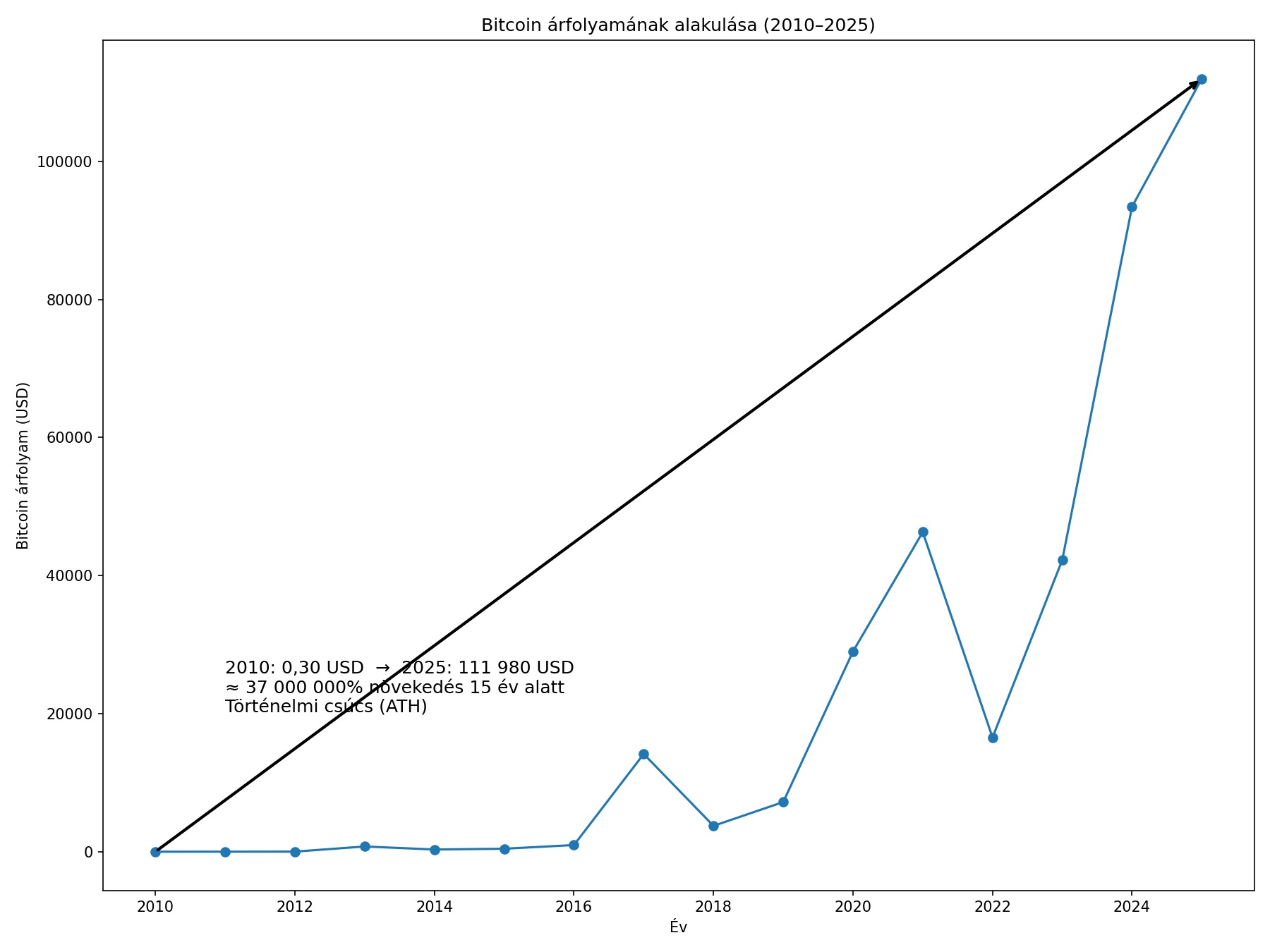
- inflation = depreciation
- Bitcoin = long-term value preservation / value growth
Bitcoin is a limited supply system that retains and increases value in the long term.
Why don't they teach this in school?
The Bitcoin a tool that cannot be inflated, manipulated, censored, or controlled by anyone. Bitcoin fundamentally challenges the traditional monetary system and offers a new, self-governing economic model. In a decentralized economy, traditional intermediaries—banks, governments, financial regulators—lose their monopoly over value creation and value transfer.
The state finds itself in a dilemma
If the population becomes financially and technologically self-sufficient, it will spell the end of the monopoly and power of the state and global financial banking systems. We are making history and entering a new financial era—a self-governing, decentralized economy where sovereign individuals and communities will have responsibility for their own money and control over the movement of value—without intermediaries.
Peer-to-Peer. No third party required.
Understand the nature of the system and money, and act with this knowledge in mind.
Hungary's national debt is a concrete, measurable problem, illustrated by the real-time debt clock, which affects the economic future of us all.
At the same time, this phenomenon is part of a much larger system—a global financial network in which credit, debt, and inflation are the basis of its operation.
Until we understand the value of money, see through the mechanism of debt, and recognize the consequences of real value erosion, we will easily become part of an economic game in which we did not make the rules. That is why it is important to consciously reflect on how these forces work—and how we can seek alternative paths toward a more self-determined, sustainable economic future.
If we want to move away from the role of passive consumers—where the state or banks decide our fate—then exploring alternatives that move toward self-determination is not just a theoretical question, but a practical possibility in the economy of the future.
₿