


If you set aside the price charts, the market noise, and the daily news, and return to the original spirit of Bitcoin as outlined in the 2008 white paper, then Bitcoin is truly a technological and social revolution that renders traditional monetary intermediaries obsolete.
On October 31, 2008, an unknown developer or group of developers, Satoshi Nakamoto, published a white paper titled “Bitcoin: A Peer-to-Peer Electronic Cash System.” The document described an electronic cash system that allows two parties to send digital money directly to each other without the need for a bank, payment service provider, or any central authority.
The first sentence of the white paper remains Bitcoin’s most important principle to this day:
“What is needed is an electronic payment system based on cryptographic proof rather than trust.”
This single sentence perhaps sums up the essence of Bitcoin better than any subsequent marketing material or market analysis.
Bitcoin is not a company. It is not a product. It is not an app.
Bitcoin is an open, decentralized protocol that uses mathematics, cryptography, and distributed systems to replace the trust that was previously provided exclusively by central institutions.
The problem that Bitcoin sought to solve
With the advent of the Internet, virtually all information became digitizable. However, there was one exception for a long time: digital money.
Digital information can be easily copied. When someone sends a file, they still retain the original copy.
When it comes to money, this is unacceptable.
When someone sends a digital coin, we need to be sure that they haven't spent it in multiple places at the same time. This is known as the double-spending problem.
Traditional electronic financial systems handle this using a central database. The bank maintains the general ledger, verifies account balances, and determines whether a transaction is valid.
Satoshi realized that there could be a system in which truth is not determined by a central authority, but by the network itself.
The Long Road of Cryptography to Bitcoin
Bitcoin didn't just appear out of thin air.
In fact, it is the result of several decades of research and development.
1970s – Public-key cryptography
The foundations of modern digital signatures were laid by public-key cryptography.
This made it possible for a person to mathematically prove the authenticity of a message without revealing their secret key.
1980 – Merkle Trees
Ralph Merkle created the structure that later became known as the Merkle tree.
Bitcoin still uses this today to efficiently verify the transactions contained in blocks.
1991 – Digital timestamping
Stuart Haber and W. Scott Stornetta developed a system that cryptographically proved that a document already existed at a specific point in time.
This idea became the direct precursor to the Bitcoin blockchain.
1997 – Hashcash
Adam Back created the Hashcash system.
This was the first widely known Proof-of-Work solution that required computational work to use the system.
This is the basis of Bitcoin's mining mechanism.
1998 – b-money
Wei Dai published his b-money proposal.
This outlined a decentralized digital monetary system that, in many respects, foreshadowed Bitcoin.
1998–2005 – Bit Gold
Nick Szabó developed the concept of Bit Gold.
This was one of the most important precursors to Bitcoin. Bit Gold already featured a decentralized ledger, cryptographic proof, and digital scarcity.
Bitcoin emerged as a synthesis of these ideas.
The Complete Timeline
👇
Bitcoin is the culmination of more than thirty years of cryptographic development
The history of Bitcoin also serves as a reminder that technological revolutions rarely happen overnight. The breakthroughs behind them are often built on the work of researchers, engineers, and thinkers who have been working independently of one another for decades. Ralph Merkle, Stuart Haber, W. Scott Stornetta, Adam Back, Wei Dai, and Nick Szabo were not originally working on the same project. Each of them was trying to solve a specific subproblem. The significance of Bitcoin lies in part in the fact that Satoshi Nakamoto combined these separate innovations into a functioning, decentralized monetary system.
The Structure of the Bitcoin Ecosystem
Bitcoin is actually more than just a blockchain.
A global infrastructure consisting of several interdependent layers.
1. The user layer
This includes those who:
- They are buying Bitcoin
- They are sending Bitcoin
- They accept Bitcoin
- They use Lightning payments
To the user, Bitcoin often seems like nothing more than a wallet app.
Behind the scenes, however, there is much more going on than that.
2. The Wallets
A Bitcoin wallet doesn't actually store money.
It stores private keys.
The private key proves ownership of a specific amount of Bitcoin.
The portfolios can be classified into several categories:
Software Wallets
- mobile apps
- desktop applications
- browser-based solutions
Their advantage is that they are quick to use.
Their disadvantage is that, when connected to the internet, they present a larger attack surface.
Hardware Wallets
Private keys are stored on a dedicated hardware device.
Transactions are signed on the device.
This is currently one of the safest forms of self-storage.
3. Full Nodes
One of the most important elements of Bitcoin's decentralization is the full node.
A full node:
- downloads the entire blockchain
- checks all the rules
- validates transactions
- validate the blocks
- does not trust other nodes
Each full node decides for itself what counts as valid Bitcoin.
This is one of Bitcoin's strongest features.
There are tens of thousands of publicly accessible nodes operating on the network, and a significant number of private nodes are also running worldwide.
4. Miners
The miners' tasks:
- collection of transactions
- creating blocks
- implementation of Proof-of-Work
Miners do not control Bitcoin.
They simply draft legislative proposals.
The final decision is made by the nodes, which either accept or reject the blocks.
5. Developers
Bitcoin is an open-source project.
The developers:
- they are fixing errors
- they are proposing new features
- security checks are being conducted
- they are drafting BIPs (Bitcoin Improvement Proposals)
The developers do not control the network either.
Any changes become effective only after they are accepted by the network participants.
How does Bitcoin's consensus mechanism work?
One of Bitcoin's greatest innovations is decentralized consensus.
How the network works, in simple terms:
- The user sends a transaction.
- The transaction is sent to the network.
- The nodes verify its validity.
- Miners organize transactions into blocks.
- Proof-of-Work begins.
- The winning block is added to the blockchain.
- The nodes verify the block.
All of this takes place without central coordination.
According to the white paper, the network remains secure as long as the combined computing power of the honest participants exceeds that of the attackers.
The Cryptographic Pillars of Bitcoin
Digital Signatures
Every Bitcoin transaction has a digital signature.
This proves that the transaction was indeed initiated by the owner.
Hash Functions
Bitcoin uses the SHA-256 algorithm.
The hash:
- one-way
- easy to check
- It is extremely difficult to decipher
This ensures the integrity of the blockchain.
Merkle tree
Transactions in the blocks are organized into a Merkle tree.
This makes it possible to quickly verify the existence of a given transaction without having to examine the entire block.
Proof-of-Work
Proof-of-Work makes it costly to tamper with the blockchain's history.
An attacker would have to recalculate not only one block, but all the blocks that follow it as well.
This becomes practically impossible as the number of blocks increases.
Why is it important to run your own node?
One of the guiding principles of the Bitcoin community is:
“Don’t trust it—check it.”
Running your own node puts this principle into practice.
In such cases, the user:
- validates transactions on its own
- does not depend on external service providers
- enjoys greater data protection
- is directly connected to the Bitcoin network
Decentralization is not merely a technological concept.
Nodes operated by individuals enable the network to resist censorship and centralization.
Bitcoin as a Digital Infrastructure
Bitcoin is often referred to as "digital gold."
That is partly true.
At the same time, Bitcoin is much more of a financial infrastructure.
An open protocol that anyone can build on:
- financial services
- payment systems
- savings solutions
- global value transfer networks
Bitcoin is not a product of a company.
It does not have a CEO.
It does not have a central server.
There is no switch to turn it off.
This is what makes it unique in the history of digital systems.
Bitcoin as Digital Cash
What is the most important characteristic of cash?
If I give you a 10,000-forint bill:
- you don't need a bank,
- no permit is required,
- there is no intermediary,
- there is no clearing house,
- there is no third party.
The transfer of value takes place directly between two people.
That was exactly what Satoshi wanted to digitize.
The original vision for Bitcoin was not for it to be digital gold.
It wasn't intended to serve as the underlying asset for ETFs.
It wasn't intended to be an institutional investment product.
But rather that:
"online payments directly from one party to another"
take place.
It is essentially the online equivalent of cash.
Satoshi emphasizes this several times:
- online payments,
- peer-to-peer operation,
- eliminating intermediaries,
- a solution to the problem of double spending.
This clearly shows that the original focus was indeed on creating an electronic cash system.
Hungarian Connection – The Legacy of Nick Szabó
A thinker and cryptographer of Hungarian descent, Nick Szabó, holds a special place in the history of Bitcoin.
Years before Bitcoin was introduced, he was already exploring issues such as digital ownership, decentralized money, and cryptographic trust.
His concept, called Bit Gold, became one of Bitcoin's most important precursors.
Many people regard him as the thinker who perhaps came closest to the concept of Bitcoin even before Satoshi Nakamoto.
Nick Szabó's work is not merely significant from a technological standpoint.
His writings also explore the philosophical foundations of digital freedom, self-determination, and money independent of the state.
Embody the original spirit of Bitcoin
To understand Bitcoin, it’s worth setting aside exchange rates and market noise.
The original purpose of Bitcoin was not speculation, but rather to create an electronic cash system in which trust is replaced by mathematics and cryptography.
The system is the result of decades of research and is now maintained by a global network of developers, miners, node operators, and users.
Perhaps Bitcoin’s greatest innovation is not the digital currency itself, but the demonstration that millions of people are capable of operating a shared financial system without entrusting its control to a single central authority.
This idea is just as radical today as it was when Satoshi Nakamoto first described it in 2008.
Bitcoin Timeline (1976–2026)
From Cryptography to the Global Digital Money Network
1976
🔐 The Birth of Public-Key Cryptography
Source: cisac.fsi.stanford.edu
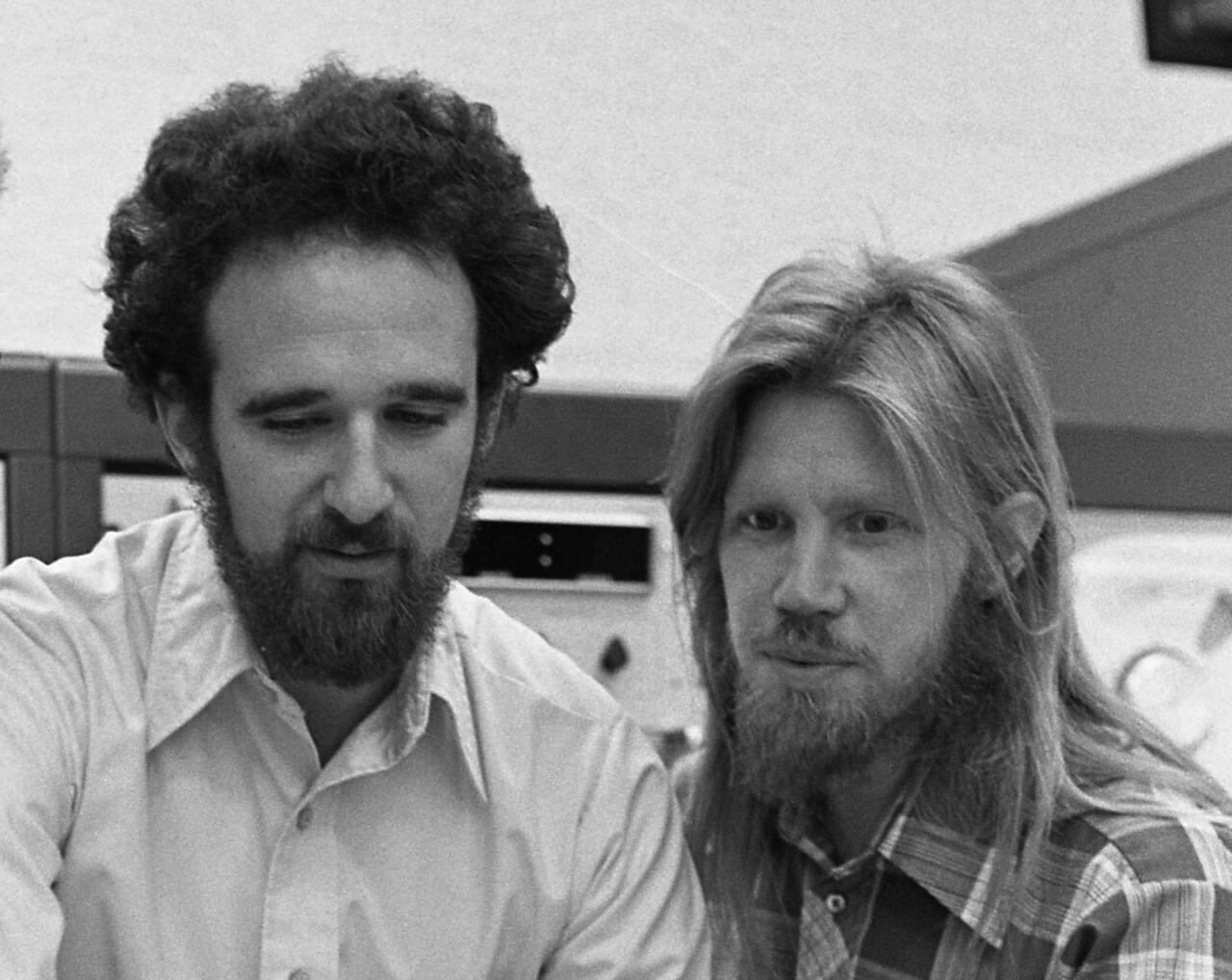
Martin Hellman and Whitfield Diffie publish their theory of public-key cryptography.
This lays the mathematical foundation for digital signatures and, later, cryptocurrencies.
1977
🔑 RSA Algorithm

Source: pinterest.com
Ron Rivest, Adi Shamir, and Leonard Adleman introduce the RSA encryption system.
One of the cornerstones of digital asset authentication.
1980
🌳 Merkle Trees

Source: medium.com
Ralph Merkle publishes his concept of the Merkle tree.
Bitcoin still uses this today to verify the transactions contained in the blocks.
1991
⏱️ Cryptographic timestamping

Source: medium.com
Stuart Haber and W. Scott Stornetta have developed a system that proves the existence of a document at a specific point in time.
One of the most important precursors to the Bitcoin blockchain.
1992–1996
🕶️ The Rise of the Cypherpunk Movement
A new community of thinkers and developers is emerging.
Their motto:
„Privacy through cryptography.”
Bitcoin's intellectual roots stem from here.
1997
⚡ Hashcash
Source: www.yellow.com.mt
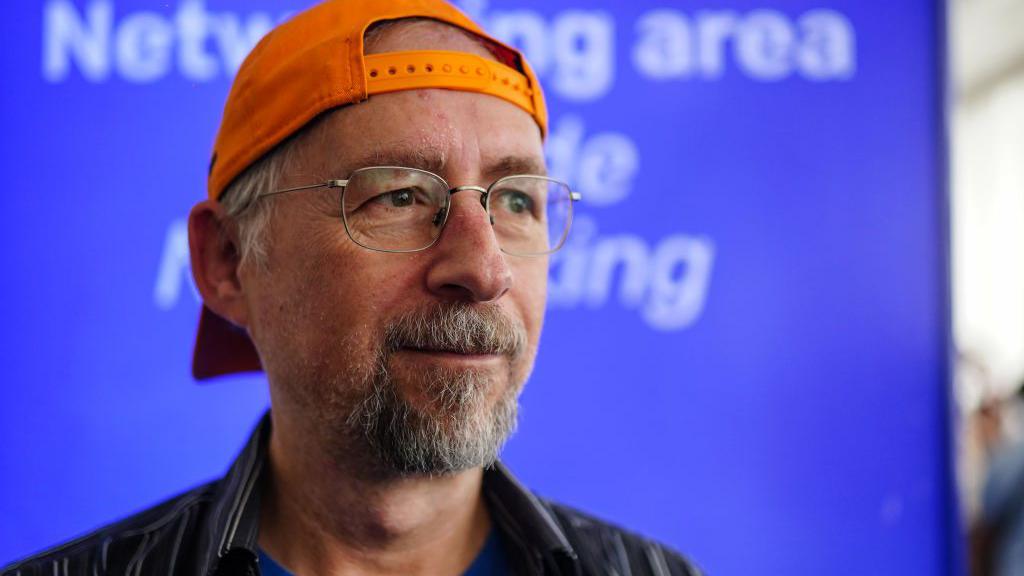
Adam Back creates the Hashcash system.
This is the first widely known Proof-of-Work mechanism.
The direct predecessor of Bitcoin mining.
1998
💰 b-money

Source: blog.areabitcoin.co
Wei Dai publishes his b-money proposal.
It is the first to describe a decentralized digital monetary system without a central authority.
1998–2005
🥇 Bit Gold

Source: coincolors.co
Nick Szabo develops the concept of Bit Gold.
Digital scarcity.
Cryptographic Ownership.
Decentralized ledger.
Bitcoin's closest predecessor.
October 31, 2008
📜 The Bitcoin White Paper Is Published
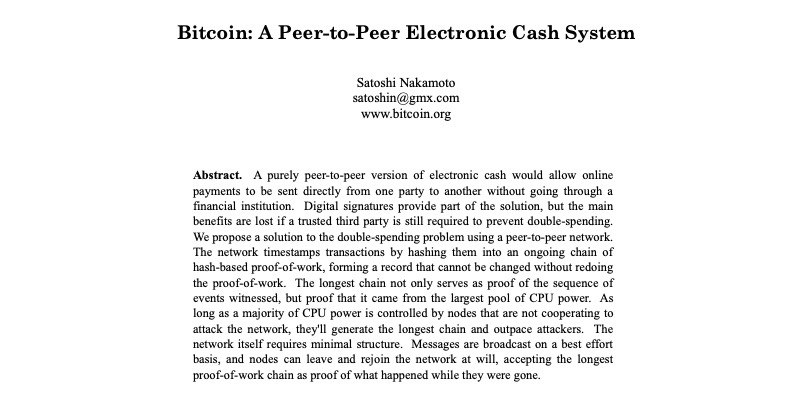
Satoshi Nakamoto posts:
📄 Bitcoin: A Peer-to-Peer Electronic Cash System
Decentralized digital cash is born.
January 3, 2009
⛏️ Genesis Block
Source: commons.wikimedia.org
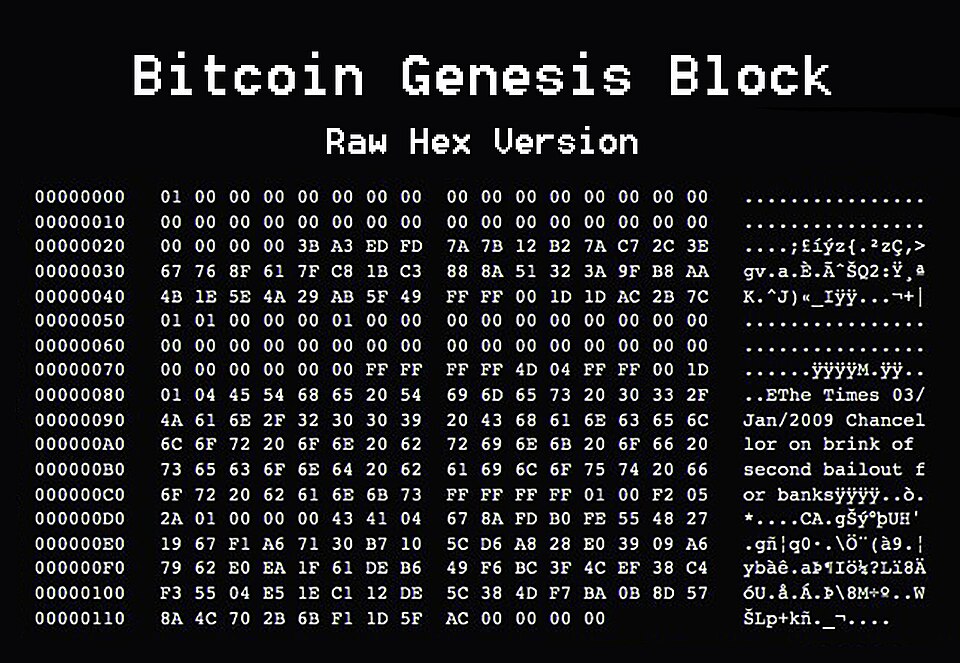
The first Bitcoin block is created.
The message on the block:
„The Times 03/Jan/2009 Chancellor on brink of second bailout for banks”
Bitcoin's first political and economic message.
January 12, 2009
💸 The First Bitcoin Transaction
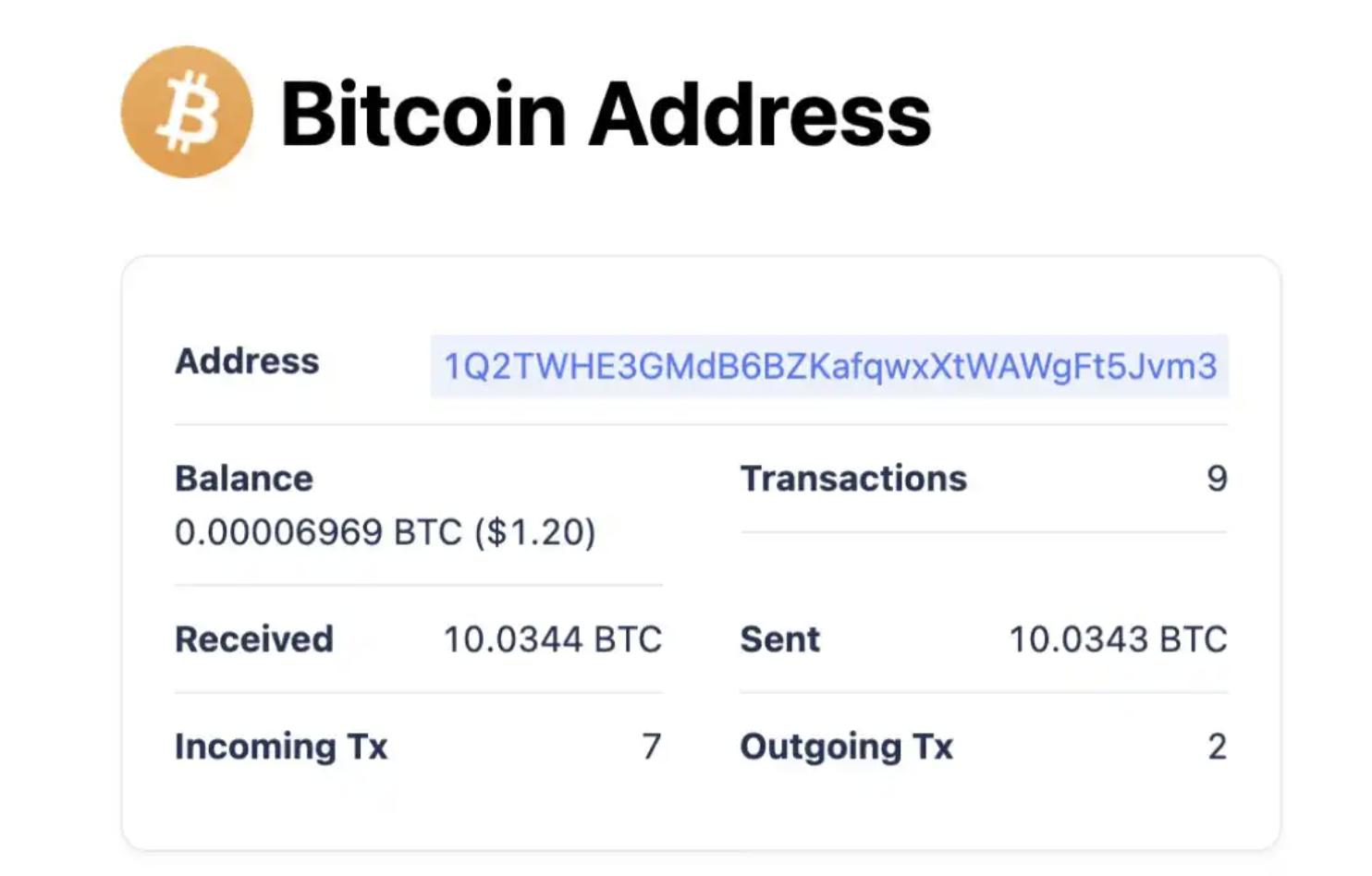
Source: chaincatcher.com
Satoshi Nakamoto sends 10 BTC to Hal Finney.
The network is proving its viability.
May 22, 2010
🍕 Bitcoin Pizza Day

Source: thedefiant.io
Laszlo Hanyecz buys two pizzas for 10,000 BTC.
The first documented Bitcoin purchase.
2011
🌍 Global Open Network
Bitcoin is becoming a global community of developers.
The first stock exchanges and trading applications are emerging.
2013
🏛️ The world is taking notice
Bitcoin is becoming a global financial topic for the first time.
Governments, central banks, and financial institutions are beginning to investigate.
2015
⚙️ Lightning Network Research
Plans for Bitcoin's second layer are unveiled.
Objective:
cheaper and faster payments.
2017
🚀 SegWit Activation
One of Bitcoin's most important protocol updates.
It increases efficiency and paves the way for the widespread adoption of the Lightning Network.
2021
🇸🇻 El Salvador
El Salvador is the first country to make Bitcoin legal tender.
A milestone in the history of Bitcoin.
2024
🏦 The Institutional Era
Spot Bitcoin ETFs are set to launch.
Bitcoin is entering the traditional financial system.
2026
🌐 Bitcoin as a Digital Infrastructure
Tens of thousands of nodes.
Global developer community.
Second-tier payment systems.
Independent digital ownership.
Bitcoin is no longer just a cryptocurrency; it is the world's largest decentralized financial network.
The era of sovereign self-determination begins
In 1976, the modern foundations of cryptography were laid; in 2008, Bitcoin was created; and by 2026, the first truly global, permissionless digital financial infrastructure had been established.