

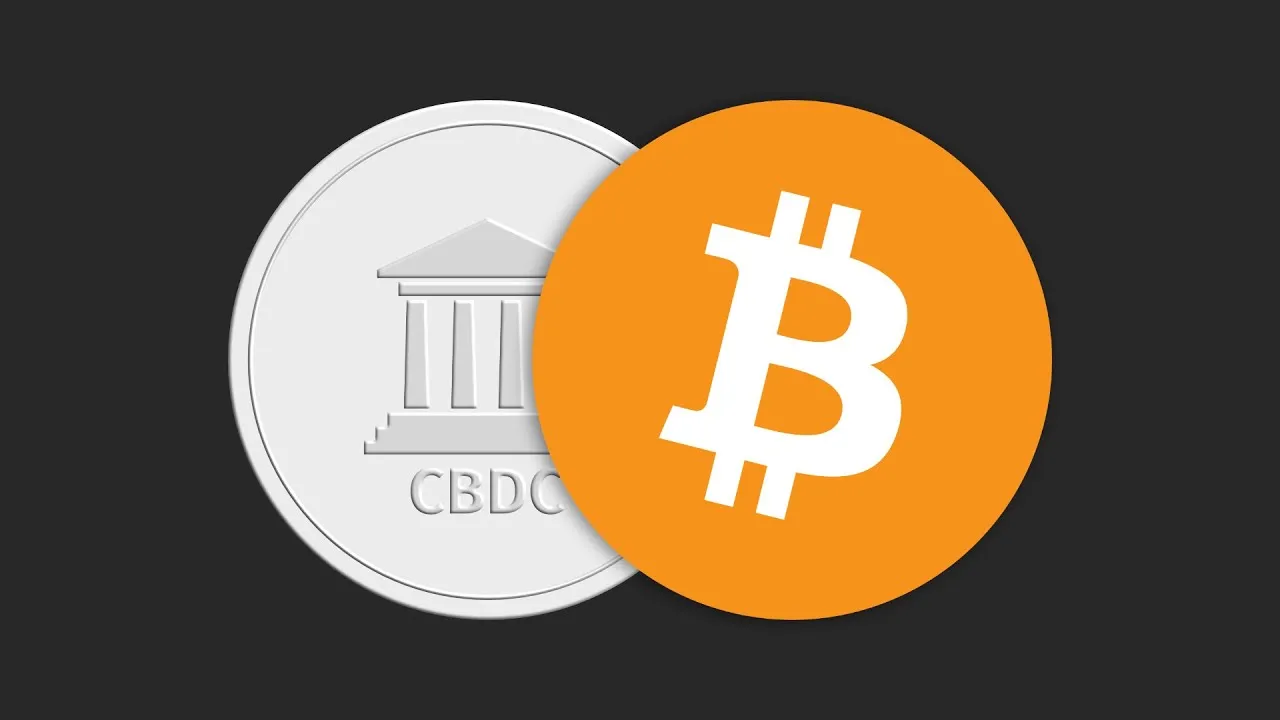
In an authoritarian system, CBDCs can be used as a weapon against dissenters, further undermining people's economic sovereignty and contradicting the purpose of most digital currencies. Bitcoin, however, offers a decentralised alternative - one where individuals retain control over their own wealth.
Governments around the world are exploring the possibility of central bank digital currencies (CBDCs) - a digital version of a country's fiat currency issued and regulated by central banks.
CBDCs aim to bring digital efficiency to fiat currencies, but they also pose new privacy risks. Unlike cash transactions, which provide financial anonymity, CBDCs can make it easier for governments to directly track transactions and potentially even restrict what you can spend your money on.
This further undermines people's economic sovereignty and runs counter to the purpose of most digital currencies.
But Bitcoin offers a decentralised alternative - one where individuals retain control over their own wealth. Because Bitcoin transactions do not require intermediaries, they provide greater financial autonomy and resilience to central power excesses.
As governments continue to explore CBDCs, we all need to think about what kind of financial future we want. CBDCs would introduce new levels of digital efficiency and control into the current system, while decentralised digital currencies like Bitcoin offer a new way forward and focus on financial autonomy.
This article is about money outlines two possible futures so you can make informed decisions about how best to manage your wealth in this changing financial environment.
What is Bitcoin?
Bitcoin is a decentralised digital currency created in 2009 by an anonymous person (or group) under the pseudonym Satoshi Nakamoto. Bitcoin uses cryptographic principles to secure transactions. The Bitcoin network has introduced a way to create and maintain a public ledger of all transactions between peers, without being verified by any person or institution.
The Bitcoin the most important features are:
1. Decentralization: Bitcoin is not controlled by any central authority.
2. Blockchain technology: A transparent and secure distributed ledger records all Bitcoin transactions.
3. Limited supply: The total Bitcoin supply is limited to 21 million coins, making it inflation-proof and an efficient way to store value.
4. Mining: New coins are generated through a process in which computers solve complex mathematical problems to verify transactions and record them on a blockchain.
5. Anonymity: Although Bitcoin transactions are publicly recorded, they are not directly linked to personal identity.
6. Transparency: All activities are public and visible on the blockchain, ensuring accountability.
What are CBDCs?
Unlike Bitcoin, which operates on decentralised networks, CBDCs are government-backed digital currencies designed to integrate directly into the current financial system.
Several governments are already testing or have launched their own versions:
- The European Union is working to Digital Euro.
- China has expanded the Digital Yuan testing.
- In 2020, the Bahamas introduced the Sand dollars.
- Nigeria introduced in 2021 the eNaira, although its introduction has faced significant challenges.
In Nigeria, the government's move towards a cashless economy with the introduction of the eNaira has sparked public opposition. By most accounts, eNaira is a colossal failure.
The authorities have introduced cash restrictions to encourage the introduction of cash, but this strategy has only led to protests and demands for the return of paper money. Despite the lifting of payment discounts and access restrictions, less than 0.5% of the population use eNaira, while more than 50% use cryptocurrency. The Nigerian experience shows that advanced technology alone cannot drive adoption without public trust and acceptance.
However, despite questionable experience, more and more countries are developing CBDCs. This raises a big question: Why?
Why are governments interested in CBDCs?
CBDCs can improve transaction efficiency and reduce costs, but they also raise important questions about financial autonomy. While governments have always exercised power over conventional currencies - regulating supply and controlling inflation - CBDCs open up far more invasive control options than fiat currencies.
Central banks would directly monitor digital transactions, which raises questions about how governments would use this data. A direct link between the central bank and citizens' wallets would also make it easier to lock people out of their money.
CBDCs can also enable new policies such as negative interest rates or programmed spending restraints. Although government officials generally discuss these measures as a means of supporting economic policy, it is not difficult to see how they could be abused:
-
Negative interest rates effectively penalise savings and force you to spend more. Likewise, CBDCs would continue to be hit by inflation as most of them are pegged to the national currency, which is losing value as governments print more and more money.
-
Programmable spending would limit what money can be spent on, or restrict how much each person can spend. Supporters say it could be an important tool to fight fraud, but could just as easily be used to undermine competition in the market.
In an authoritarian system, CBDCs can be used as a weapon against dissidents, to restrict access to certain groups, or to censor transactions that deviate from state-sanctioned behaviour. CBDCs dramatically increase the control central banks have over their currencies.
This is very different from the decentralised nature of Bitcoin, which was built to protect your financial freedom and sovereignty. The BTC structure puts control in your hands, making it difficult for a central authority to freeze, seize or restrict your money.
Bitcoin vs CBDCs: two different approaches

Some policymakers have expressed concerns about bitcoin because its decentralised nature makes it difficult for regulators to control financial flows and enforce monetary policy. While bitcoin increases personal financial sovereignty, critics argue that governments should limit decentralised digital currencies to combat money laundering and ensure economic stability.
In response, several government officials have presented CBDCs as an effective way to replace Bitcoin with a digital currency that they can regulate.In 2021, the head of Bank Indonesia said "CBDCs would be one of the tools to fight cryptocurrency". Likewise, in 2021, after China's crackdown on Bitcoin, a People's Bank of China deputy governor for digital yuan said the central bank remained concerned about the threats posed by digital currencies to economic stability.
Even if the concerns about economic stability are well founded, there is no evidence that CBDCs offer a solution, as individuals would continue to use Bitcoin. Meanwhile, the decentralised model of Bitcoin is gaining ground worldwide. As an open source financial system, it offers an alternative for those who value self-care and financial sovereignty.
The future of financial freedom is possible
Most CBDCs are still in the early stages and some governments seem to be rethinking them completely after the initial challenges, such as Nigeria's experience with eNaira. In democratic countries, people can write to their representatives or vote on how to shape the introduction of CBDCs.
The point is that CBDCs are an imperfect answer to a problem that has already been solved. There is no need to risk potential surveillance built into government-backed centralised systems, because Bitcoin - a decentralised currency that gives you the key to your wealth - already exists. And if you use Bitcoin, it's much harder for a government to freeze your assets or track your spending.
Today you can take the first steps towards control and independence.
Choose smart money, choose Bitcoin.