What began as an initiative within the Bitcoin Beach community has now grown into one of the world’s best-known Lightning wallets....


What began as an initiative within the Bitcoin Beach community has now grown into one of the world’s best-known Lightning wallets....

Bitcoin is often referred to as the currency of the future, yet many people wonder: if it’s truly usable...

Governments around the world are building up Bitcoin reserves, and the largest asset managers are launching Bitcoin-based...

The greatest transfer of wealth in history is taking place before our very eyes – and most people don't even notice. While most of the world still doesn't understand what's wrong with the current bureaucratic, fiat-based monetary system, a few "crazy" early adopters discovered the true value of internet money years ago.

In recent years, cryptocurrencies and blockchains have become increasingly popular with the promise of decentralization. However, if we look at the technical background, it quickly becomes clear that most mainstream chains are not actually fully decentralized, but heavily dependent on traditional, centralized Web 2 providers—which is more of a "Web 2.5" transition than true Web3.

Other blockchains still need centralised cloud servers, such as AWS, to run their applications and websites. ICP is the first platform to build a truly decentralised internet, run entirely by the community.

ICP is the future of the internet, the only blockchain that is actually Web3. To use the other blockchains internet requires a central infrastructure. ICP stands out because it can host decentralised applications (dapps) entirely on-chain - frontend, backend, database, AI model, all in one.

People are realising that simply owning Bitcoin makes you empowered and independent of banks, institutions and states. Self-sufficient communities can emerge, exchanging value, services and goods through decentralised systems. Peer-to-Peer. No third party is needed.

The Genius Act paints a fateful narrative that will make stablecoins legal tender in the US, fundamentally challenging the dominance of the traditional banking system - not just in America, but globally, over time. The aim is to create a parallel financial system where citizens can manage their wealth in a self-directed way, under national control but with decentralised technology.

History will remember 18 July as the day the banking system lost its monopoly on money. The signing of the Genius Act marked a turning point in cryptography and the construction of the modern economy.

Over the past decades, the majority of people have gradually outsourced control of their lives to third parties - be it health, information or even their finances. Banks, states and financial institutions have provided a convenient alternative, but in return, real financial control has gradually slipped out of the hands of the individual. For those who believe in individual sovereignty, financial self-determination and responsible asset management, Bitcoin offers an alternative.
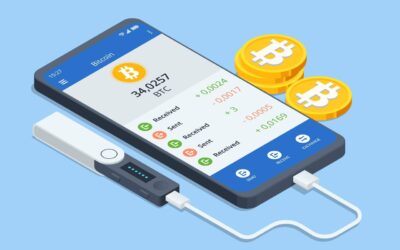
As Bitcoin becomes an increasingly popular means of storing wealth, the need for reliable, secure and self-storage solutions is growing. Instead of centralised providers (e.g. exchanges), more and more people are opting for non-custodial Bitcoin wallets, where private keys remain in the user's possession.