
For a long time, the underpass at the Iváncsa train station was just another one of those familiar, functional, yet impersonal spaces. A place people pass through but don’t linger in. Today, however, it offers a completely different experience: colors, shapes, and stories accompany travelers along the way. The decoration is not only a visual renewal but also an imprint of a community-oriented vision—the identities of three towns converge here with László Varga’s unique perspective.
Laci tells us about his latest work
When I first encountered the space of the Iváncsa railway underpass, I saw a typical, sterile transit corridor. However, the opportunity to fill this space with new meaning arose from a local initiative: someone saw in it what had previously existed only as a possibility. I became involved in the project through a friend’s recommendation, and it soon became clear to me that this would be more than just decoration.
During the development of the concept, the direction was shaped by the collaborative vision of three towns—Iváncsa, Beloiannisz, and Besnyő. It was important that each town’s unique character be reflected on the walls. For me, finding that balance is always an exciting challenge: how can I shape my own visual world while ensuring that the local identity remains recognizable?
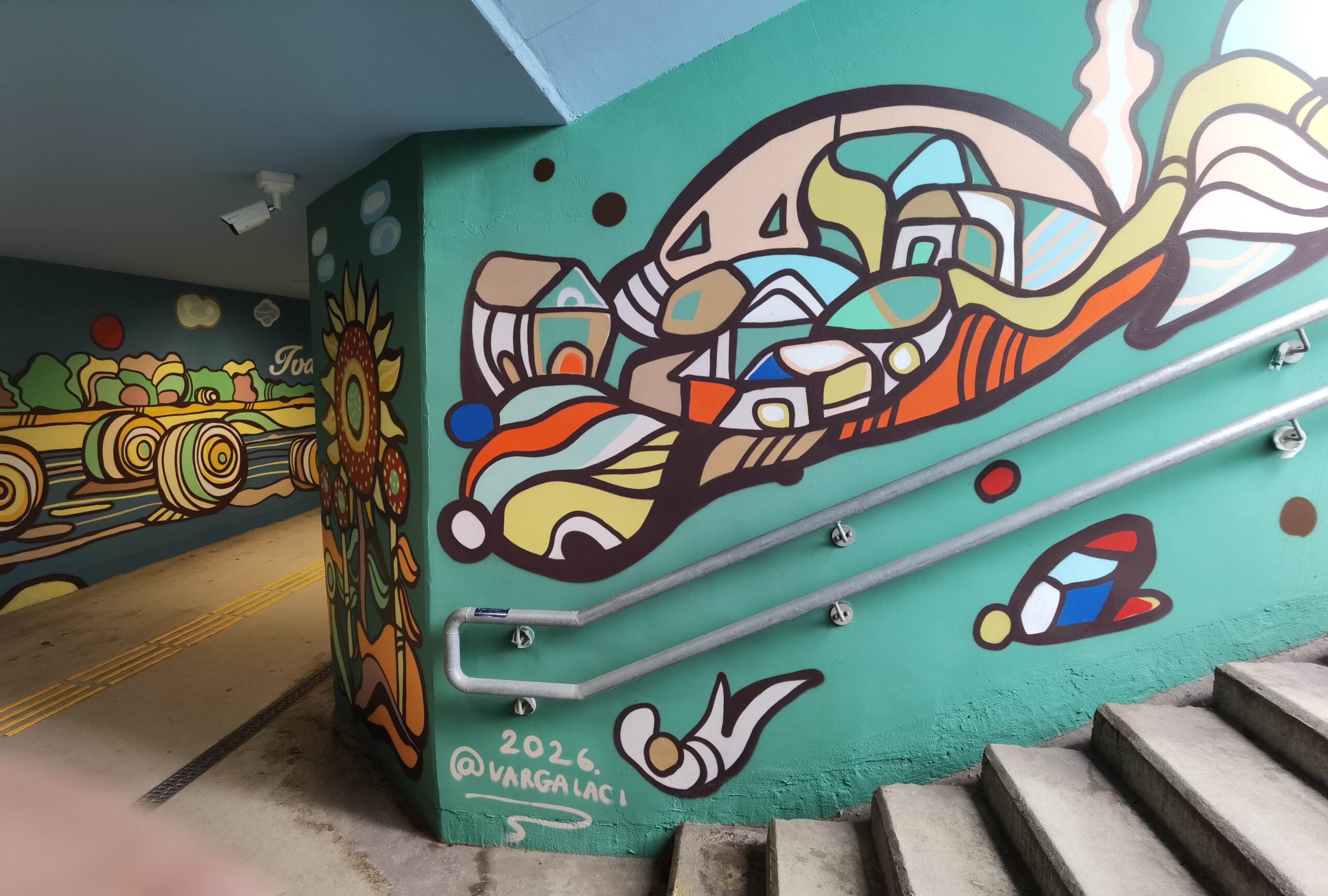
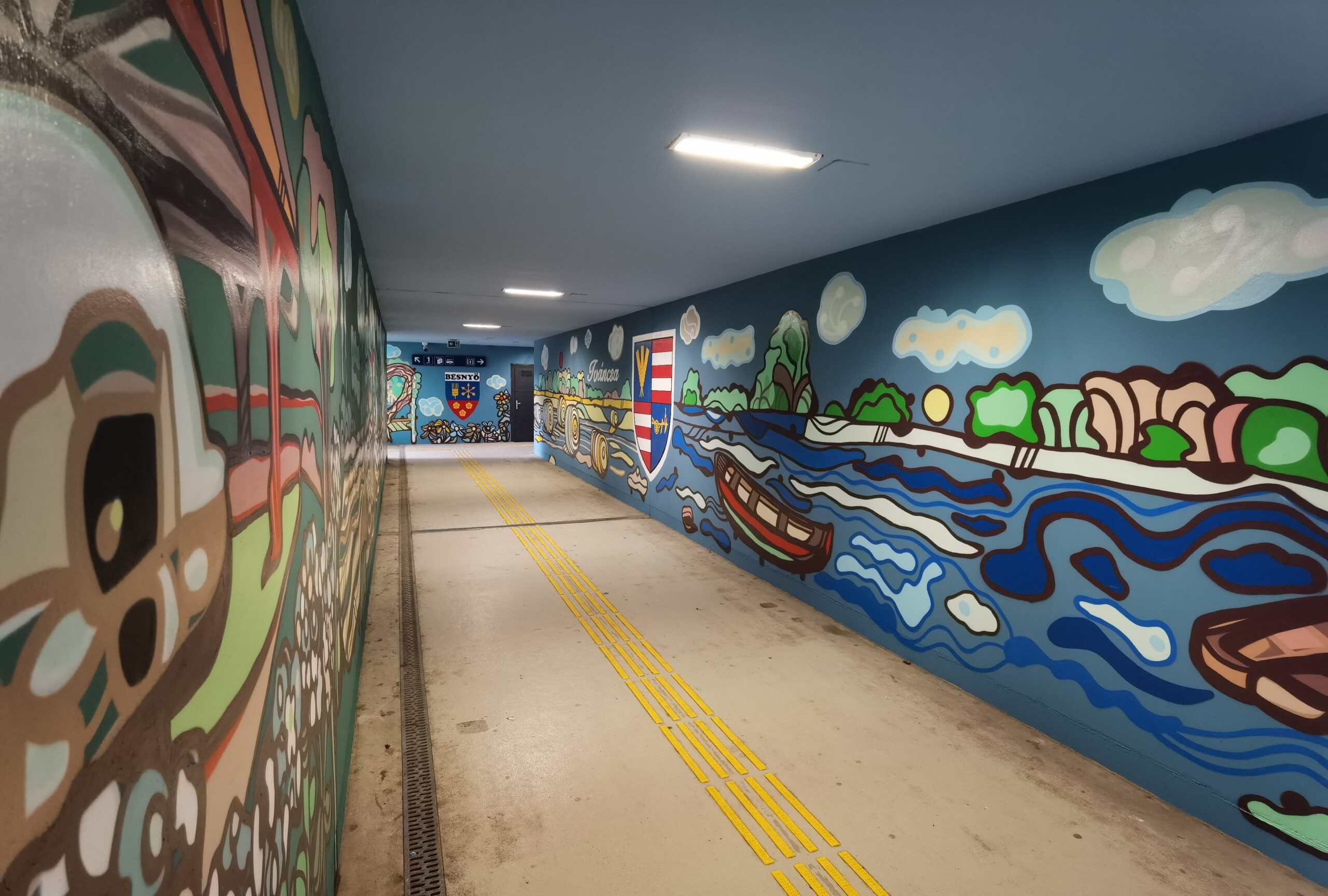
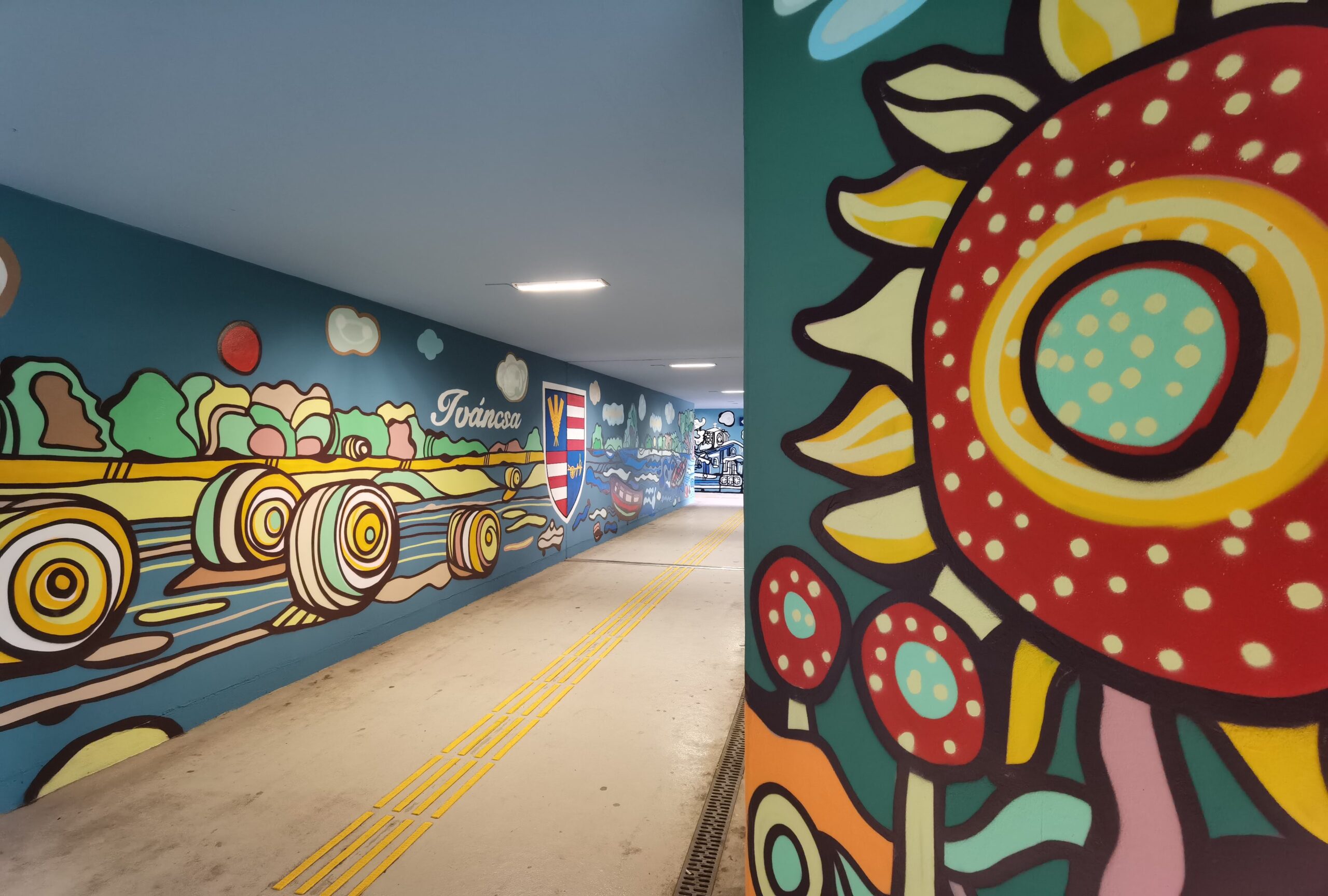
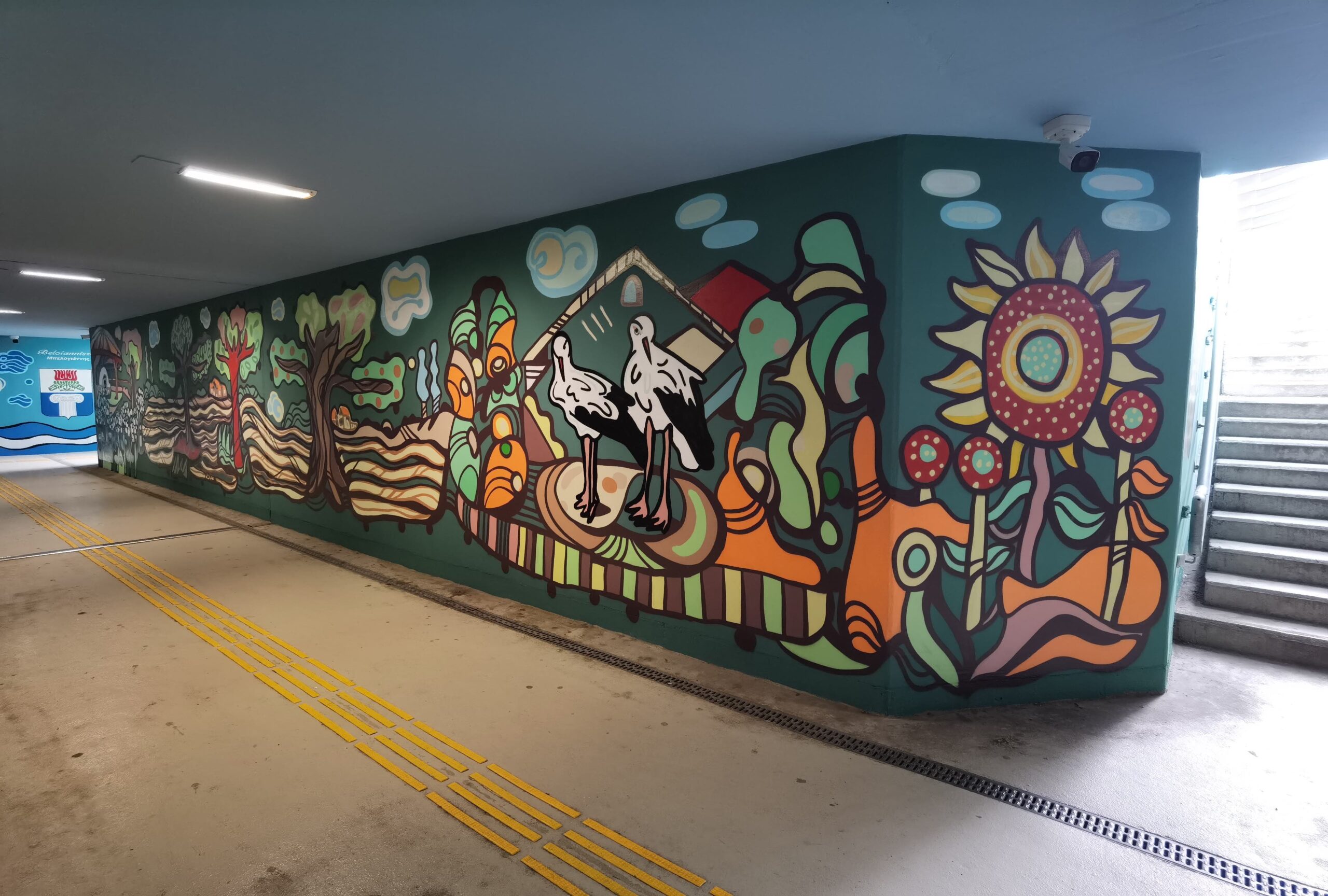
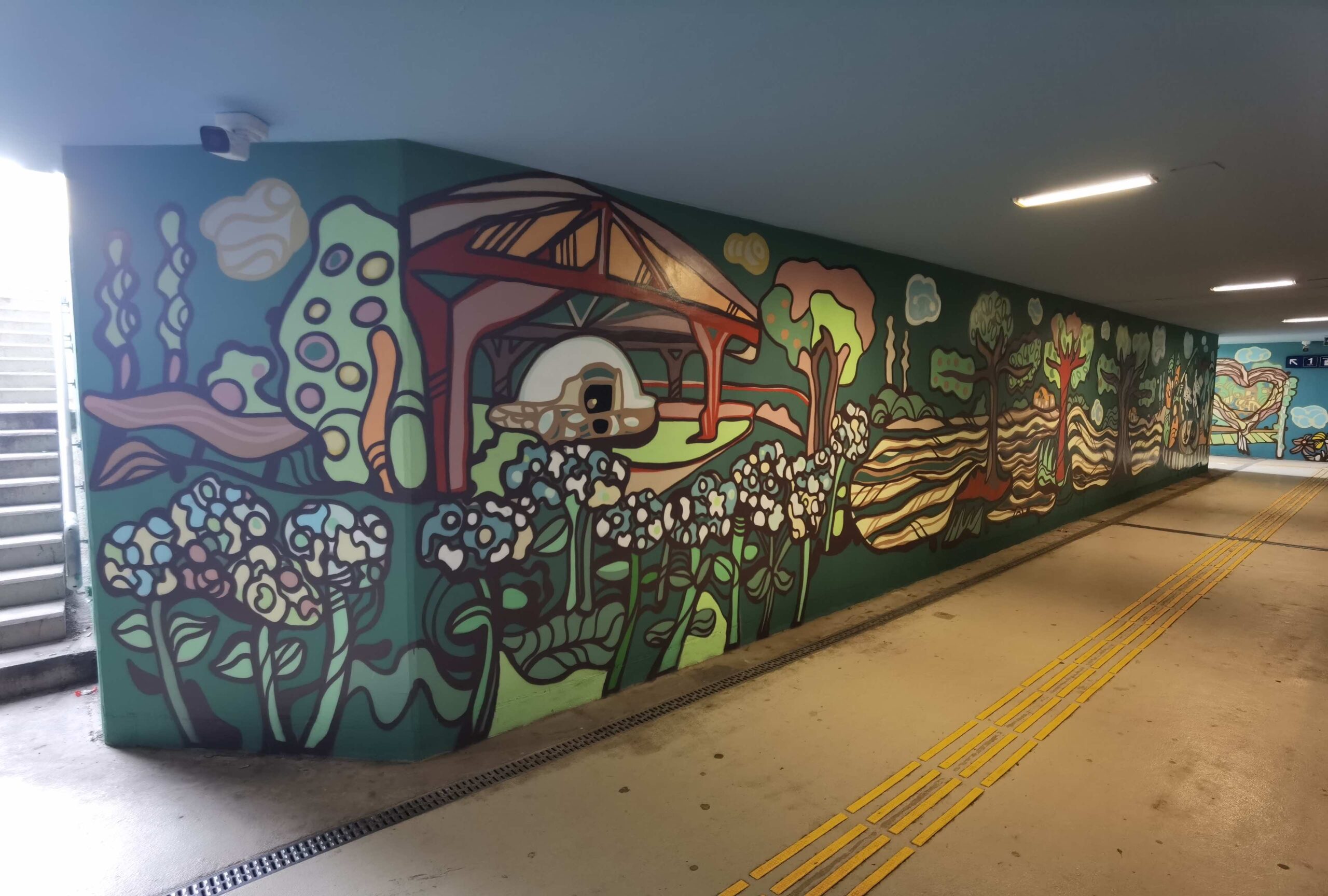
The motifs on the walls are linked to rural life and nature. Scenes from the Danube riverbank, boats, agricultural landscapes, haystacks, plowed fields, and one of the area’s distinctive symbols, the stork, have all found their place—the latter not only as a motif but as part of the community’s daily life, since residents follow their lives via webcam. I deliberately gave the compositions a slightly more fairy-tale-like, illustrative feel so that they would be accessible and enjoyable for people of all ages.
Before starting the project, I digitally mapped out the entire space. I photographed the underpass and then created the visual designs on a tablet, which evolved continuously throughout the planning phase. To create the emblems and finer details, I used a projector and stencil technique, while for the painting I mainly used Loop spray cans—nearly 80 of them. For the finer details, I used a paint marker, which allowed for precise execution.
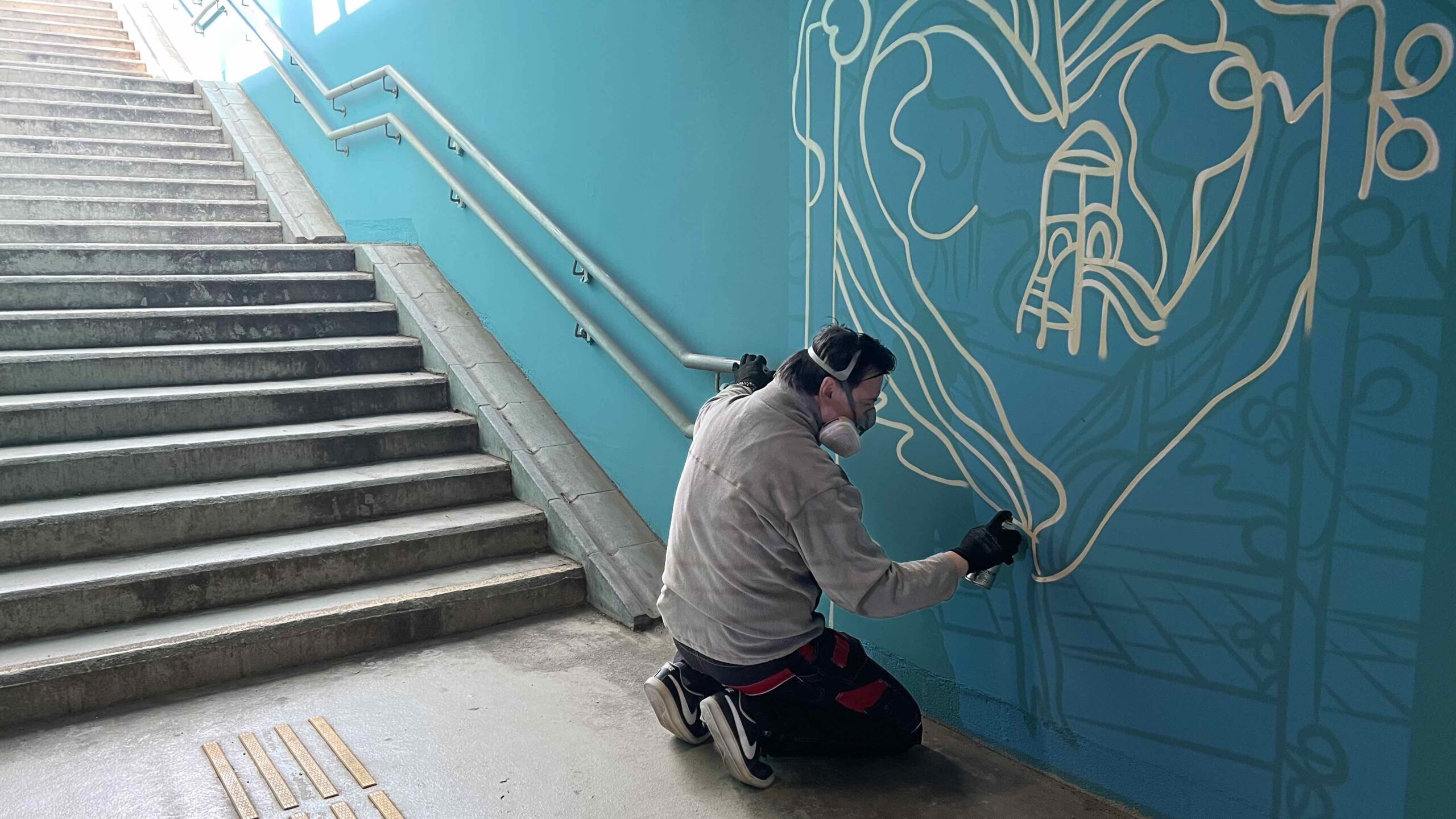
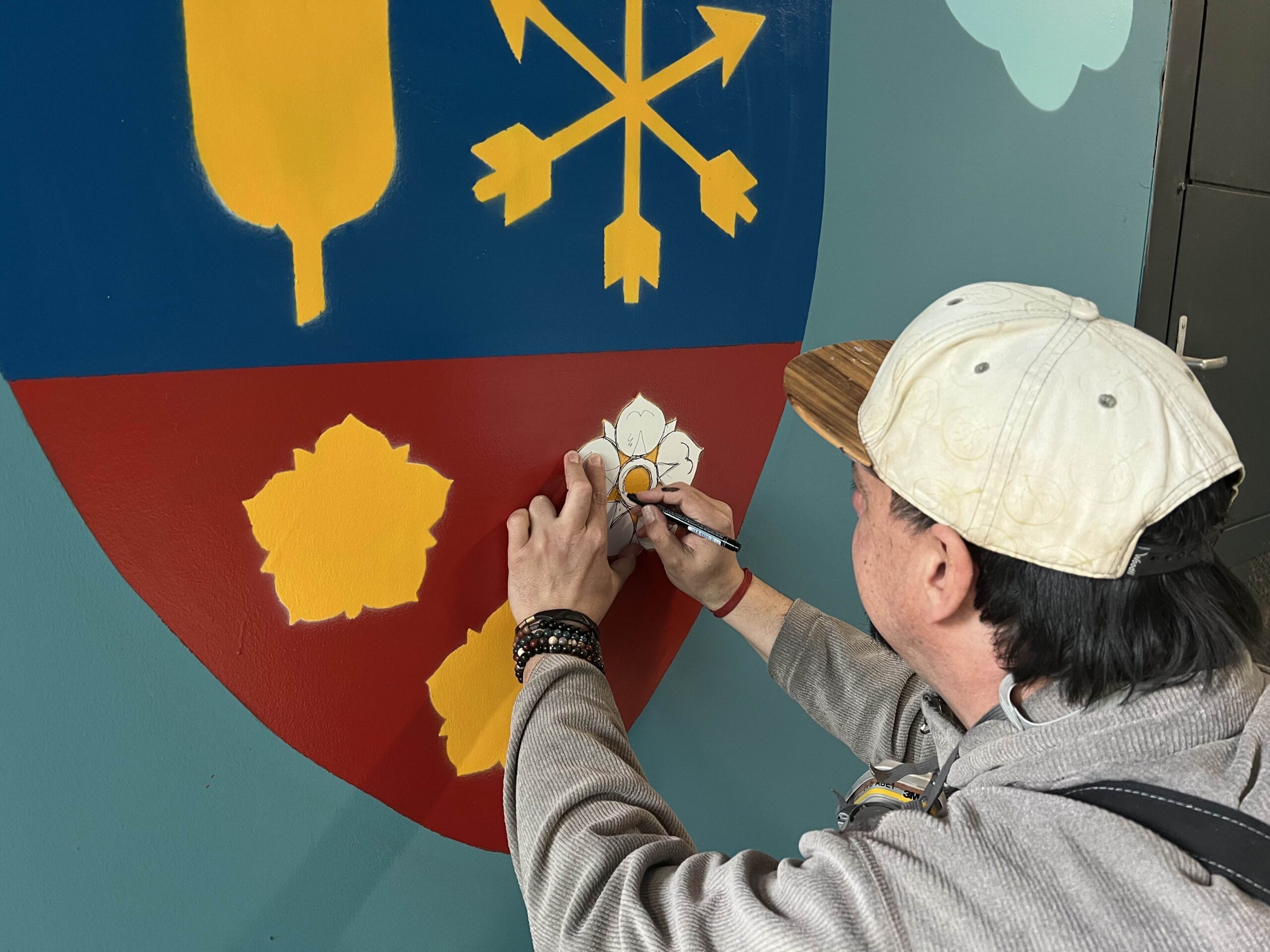
The use of color played a decisive role in shaping the overall look. The base colors—shades of green and blue—were applied by a painting company and had already proven effective in similar settings. I built upon these with natural tones: browns, greens, yellows, and various blues. The Greek temple motif was given a more distinctive, high-contrast color scheme, while the coats of arms appeared in their original colors, reinforcing the authentic look.
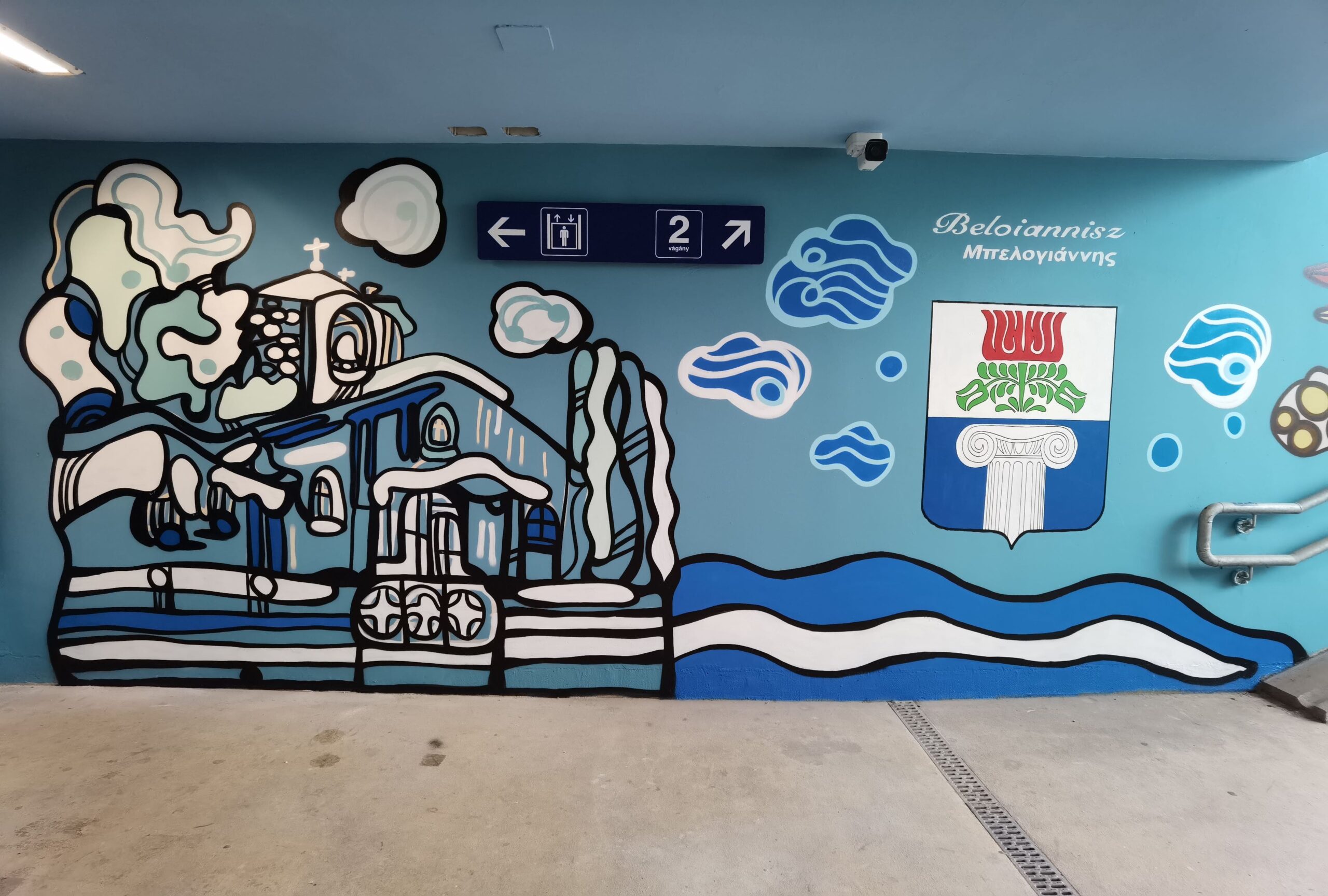
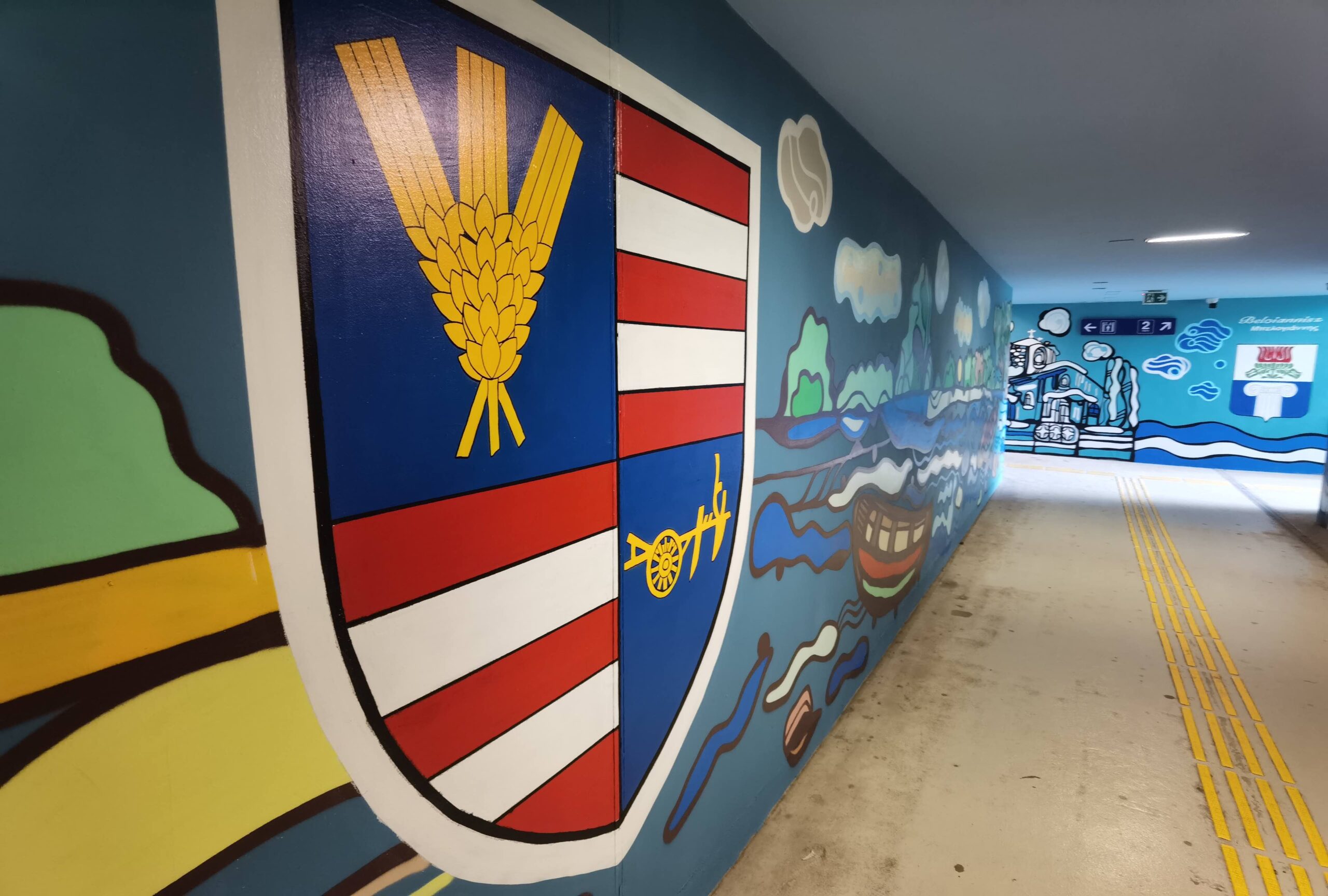
The creative process began months earlier. Following consultations in the fall, the winter was devoted to planning, while the actual work took place in the spring. I started on March 20 and finished on April 2. The nearly 190-square-meter surface area posed a significant physical and mental challenge, so I had to carefully pace myself. Although the weather interfered for a few days, the entire painting was completed in 9 days overall.
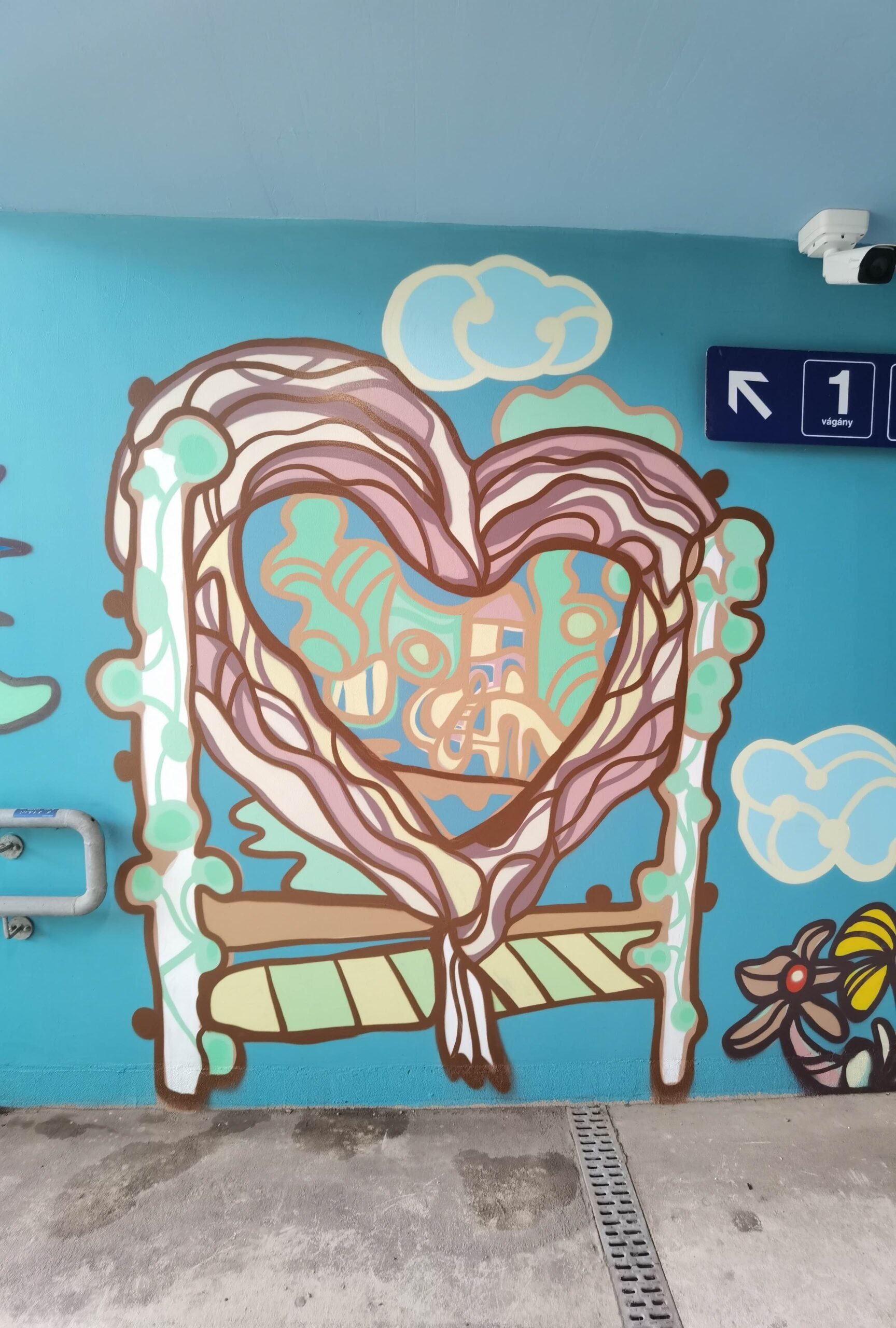
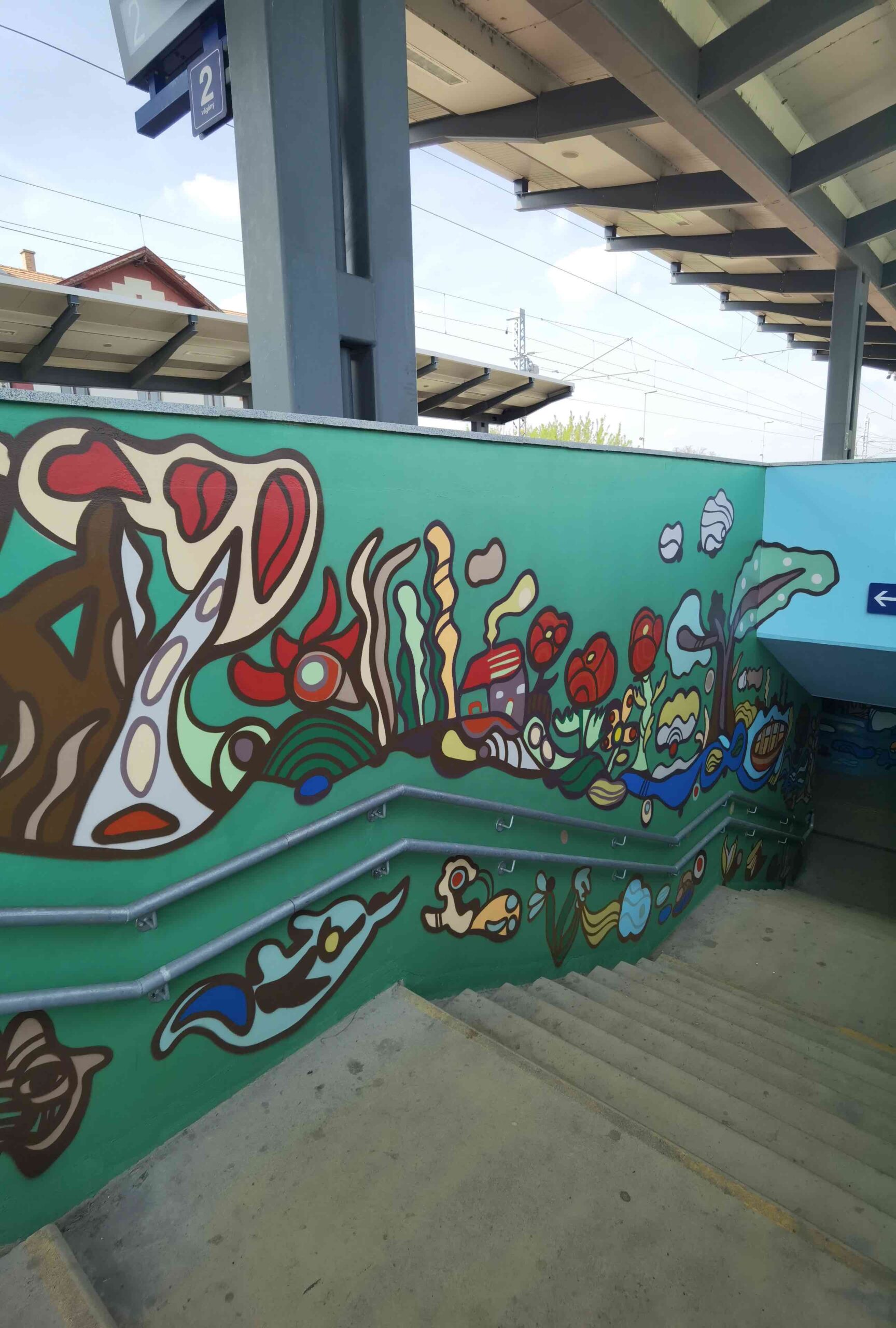
For me, one of the most important aspects of creating art in public spaces is the immediate feedback. People’s reactions, the conversations, and their curiosity are all part of the process. In Iváncsa, I received a particularly large amount of positive feedback—many people stopped, asked questions, watched me work, and often asked if I really was doing it all by myself. These moments reinforce my belief that art has the power to create connections, bring joy, and add real value to everyday life.
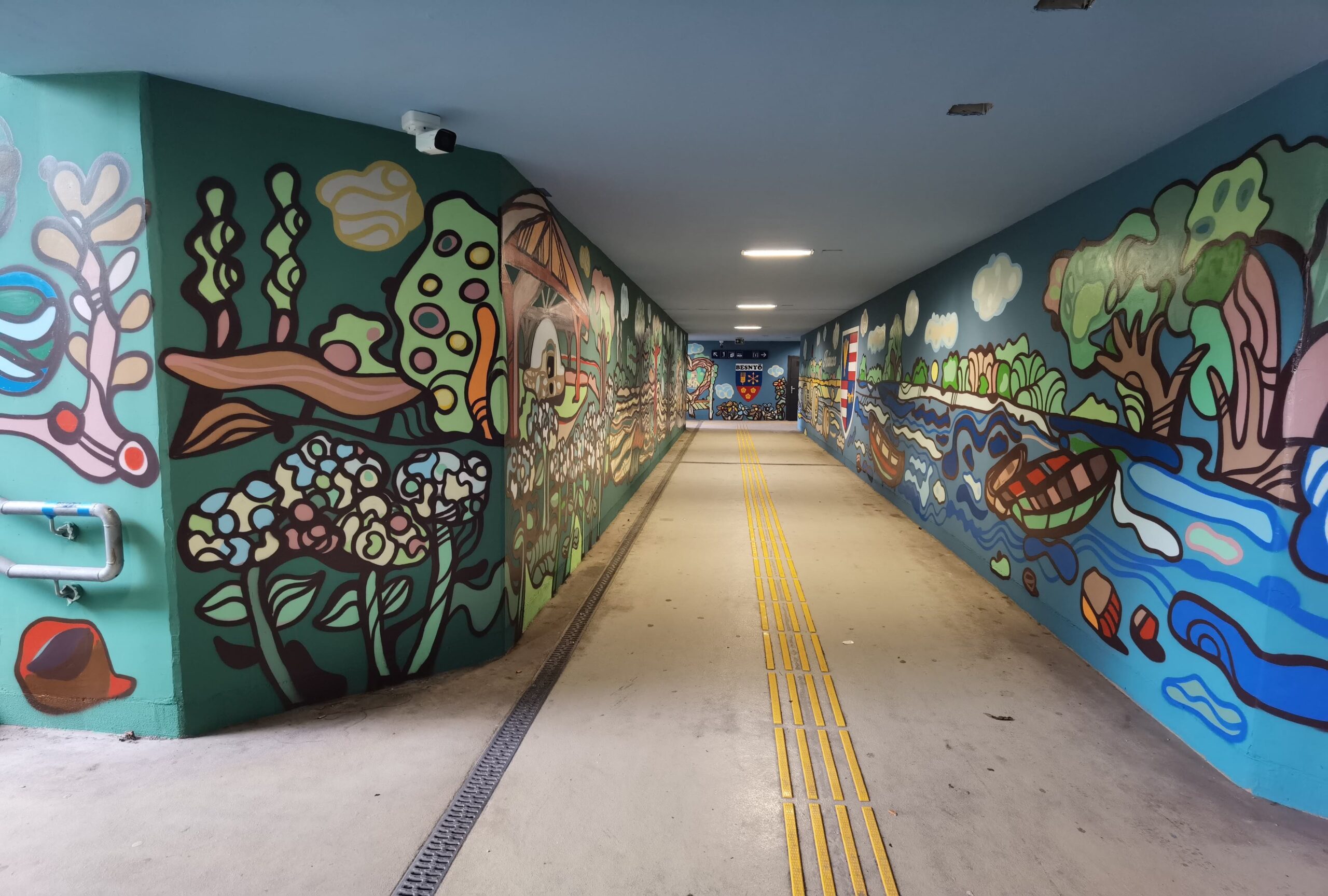
Today, this underpass is more than just a passageway. It has become a space where the community’s history, the beauty of nature, and a creative vision come together—and where every journey is a little more than just getting from one place to another.
Creator: László Varga
Title: Decoration of the Iváncsai Underpass
Location: Iváncsa, Railway Station Underpass
Date of creation: 9 days
Technique: spray paint, stencil, digital design