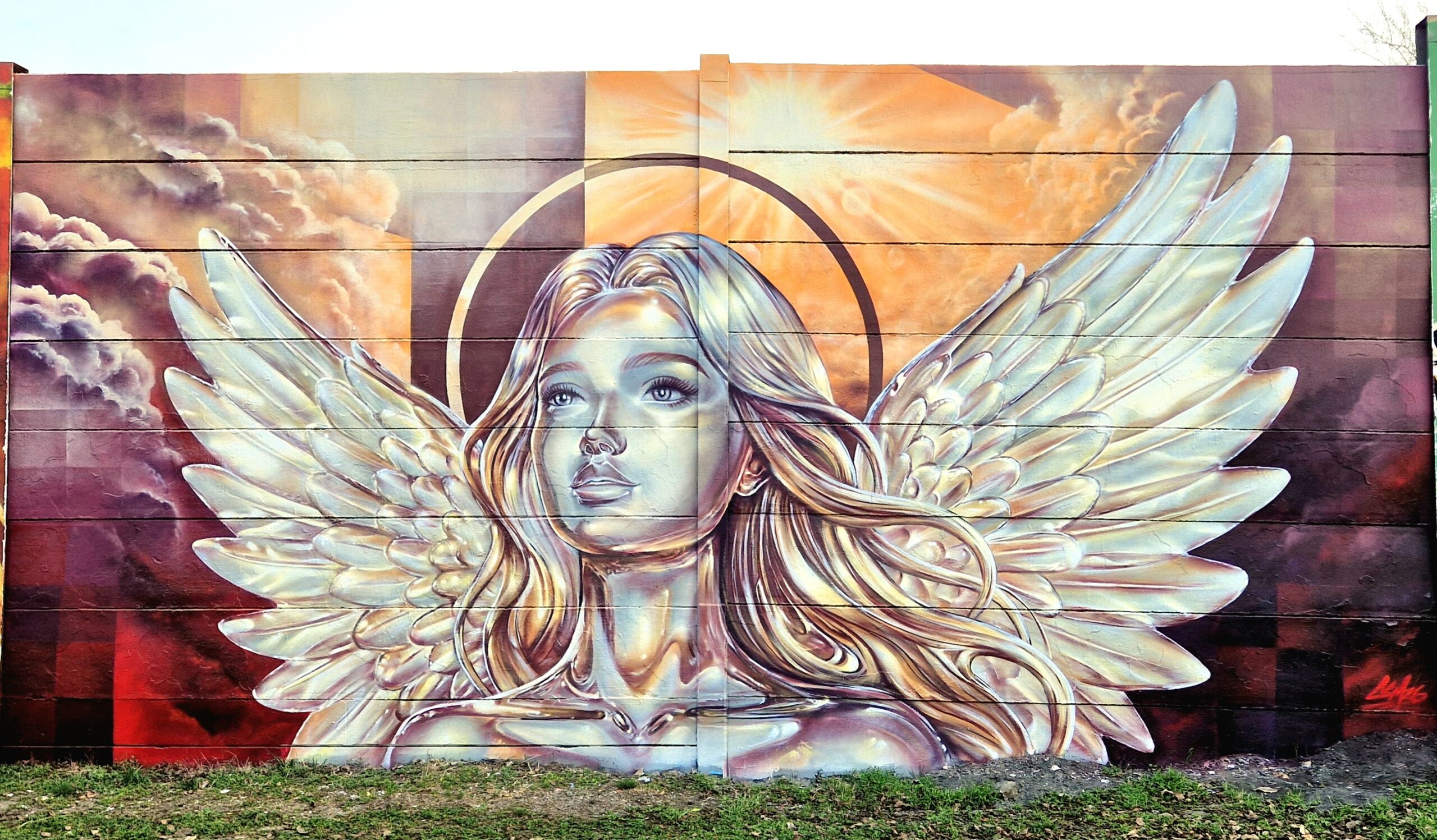
Street art is often about quick gestures and raw energy, but there are works that speak more of patience, precision, and a carefully constructed visual experience. CSM’s work titled “Glass Angel” is the final piece in a four-part mural series that not only posed a serious technical challenge but also holds personal significance for the artist. The transparency of the glass symbolizes fragility, the angel represents beauty and love, while the dark and light tones in the background symbolize the duality of the world.
How did the idea for “The Glass Angel” come about, and why did you choose to depict the figure using a glass-like effect?
The concept is actually the final piece in a series of four murals. The entire project was inspired by an exceptionally talented and, to me, dear and inspiring woman. The glass effect symbolizes fragility, the angel symbolizes beauty and love, while the background symbolizes duality: dark, deep reddish tones at the bottom and, at the top, a kind of divine light effect in the sun’s rays that illuminates the angel. I love this theme, and this image is the crown jewel of the series.
The glass effect is one of the most difficult textures to paint. What visual elements (streaks of light, distortions, transparency) were key to this piece?
In fact, every single highlight is just as important. It’s an extremely complex texture, and if I don’t paint something the way it should be, it won’t produce the effect I need.
To what extent was the system of refractions and reflections planned in advance, and to what extent did it develop spontaneously during the painting process?
The entire painting was planned out in detail, but while painting, I can only capture the composition and essence of the texture to ensure that the overall effect is preserved. Going into greater detail would have taken too much time, which I simply didn’t have at the moment.

How can you create such sharp, thin streaks of light and subtle transitions using spray paint? Did you use any special caps or techniques?
To be honest, it’s really just a matter of routine. There are roughly 10 different hand-holding techniques in painting, and with the right combination of them, you can create just about anything. This requires a certain amount of experience. Also, for very fine details, I usually use my own stencil caps and sheets of paper to ensure the lines remain nice and sharp even up close. For this painting, due to its size, I only needed to use a minimal amount of stencil cap.
Did you plan the placement of the lights and shadows in advance, either digitally or on paper, or did it take shape on the wall as you were painting?
I plan everything carefully in advance using digital tools. There’s no time to experiment with this kind of thing on the wall. It’s challenging enough to execute this with a spray can. I usually leave 10–20% of the design open; this allows me to enhance the image’s cohesion through spraying, compared to the digital design.
What was the most difficult part of this piece: conveying the sense of transparency, the lighting, or maintaining the proportions?
This is a consistently difficult and complex texture; it’s equally intricate throughout, but the wings were perhaps the hardest part for me to figure out. Fortunately, with time, I got the hang of putting it together.

To what extent did the texture of the wall or the location influence the creation of the glass illusion?
It would look better on a completely flat wall, but as long as there’s no glare, I don’t think it’s distracting at all.
Was “The Glass Angel” more of a technical challenge for you, or did you also want to convey a deeper meaning through your choice of materials?
It was certainly a technical challenge, but as I mentioned at the beginning, the image has a deep symbolic meaning for me. It symbolizes fragility, beauty, and love.
How long did it take to complete the painting "Glass Angel," and where is it located?
The mural took four days to complete due to the complexity of the effect, and it is located on the legal wall in Szemeretelep, in Budapest’s 18th district. I’m confident that it will remain there for a long time to come, and that no one will deface any of my four murals. 😊
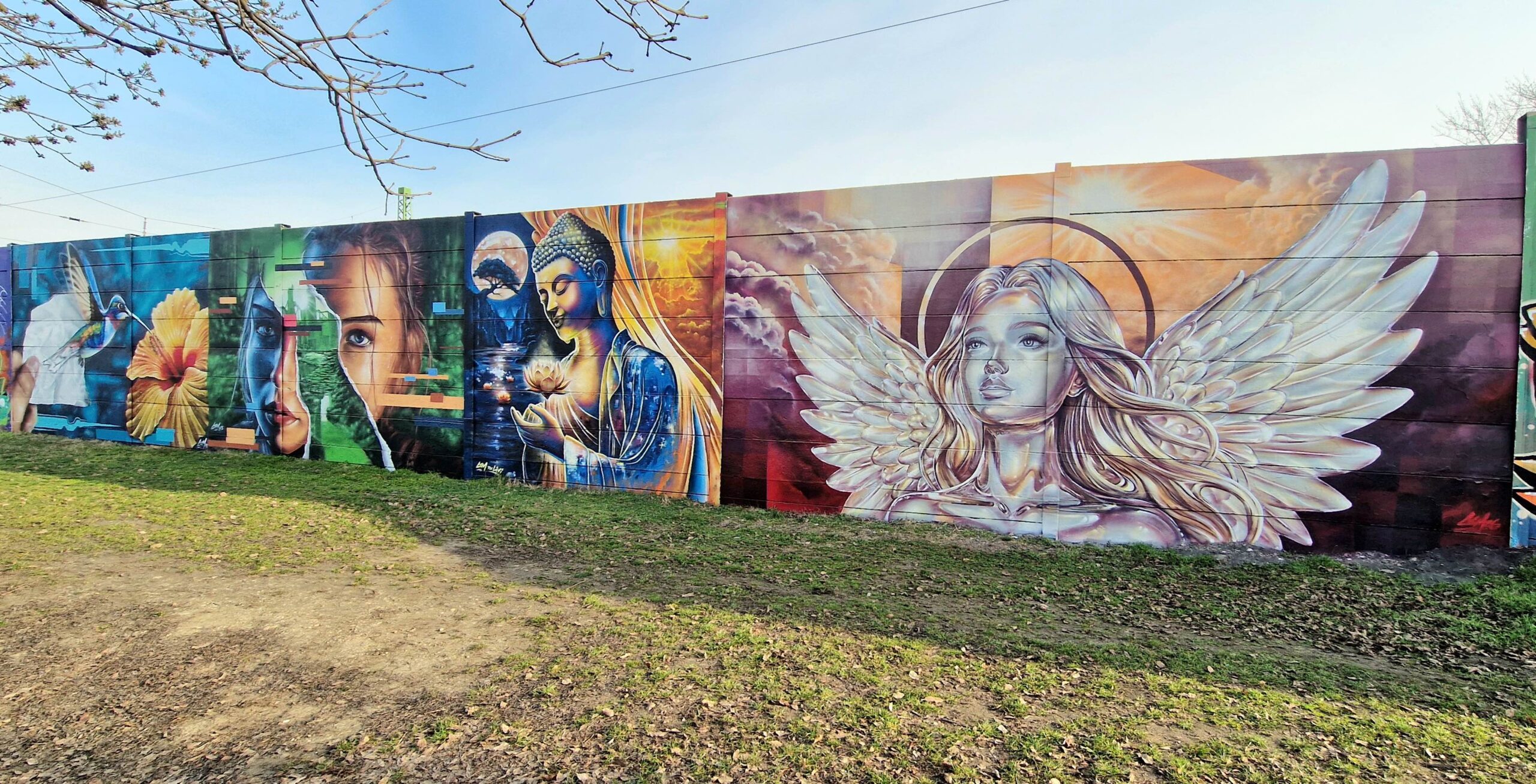
Creator: CSM
Title: Glass Angel
Series: 4-part mural series – final piece
Location: Budapest XVIII, Szemeretelep, legal wall
Date of creation: 4 days
Technique: spray paint, stencil cap, digital design
Photo: CSM