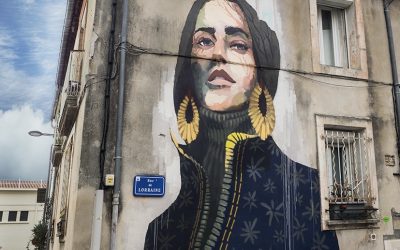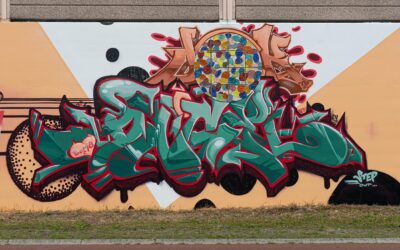
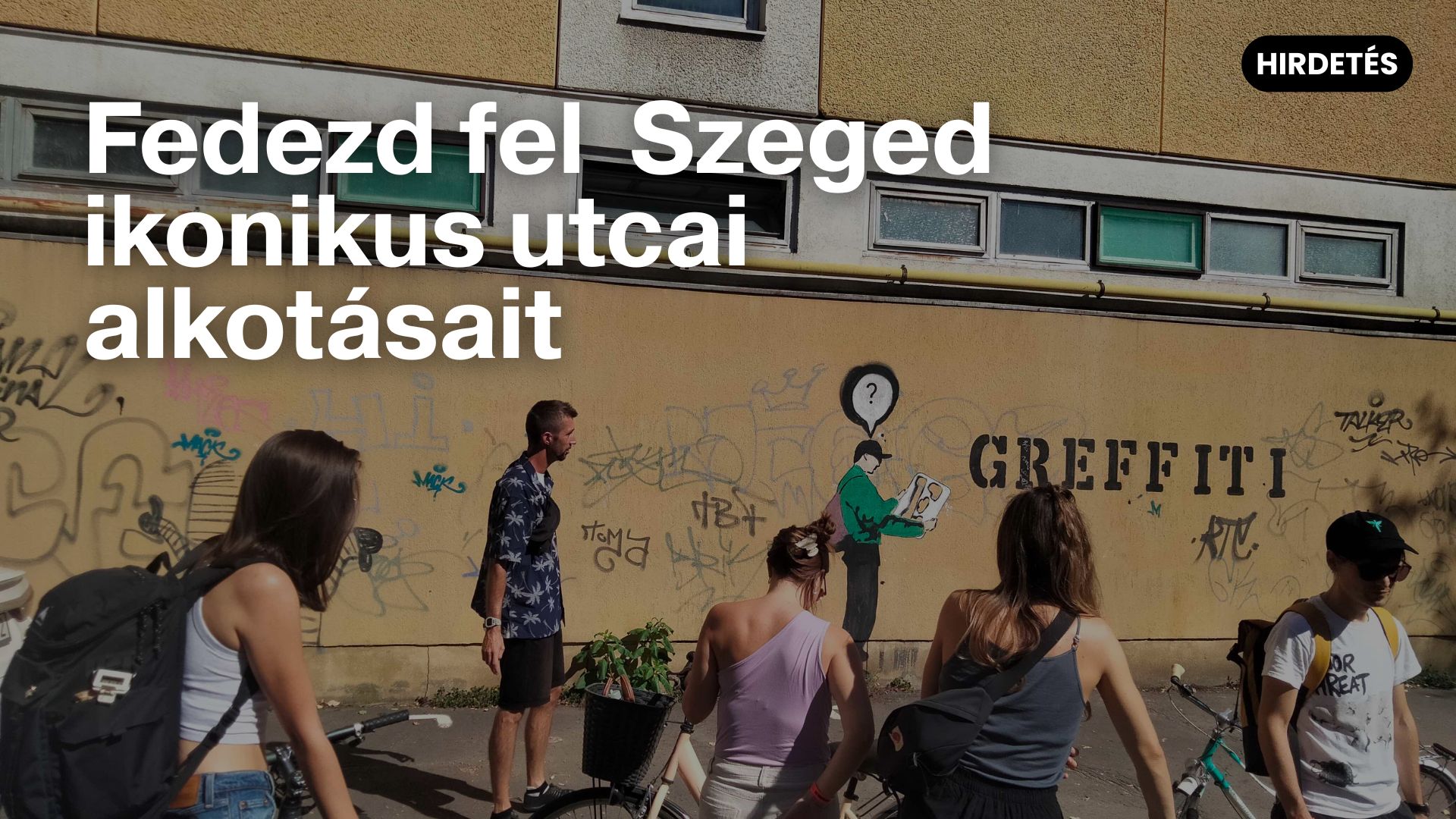
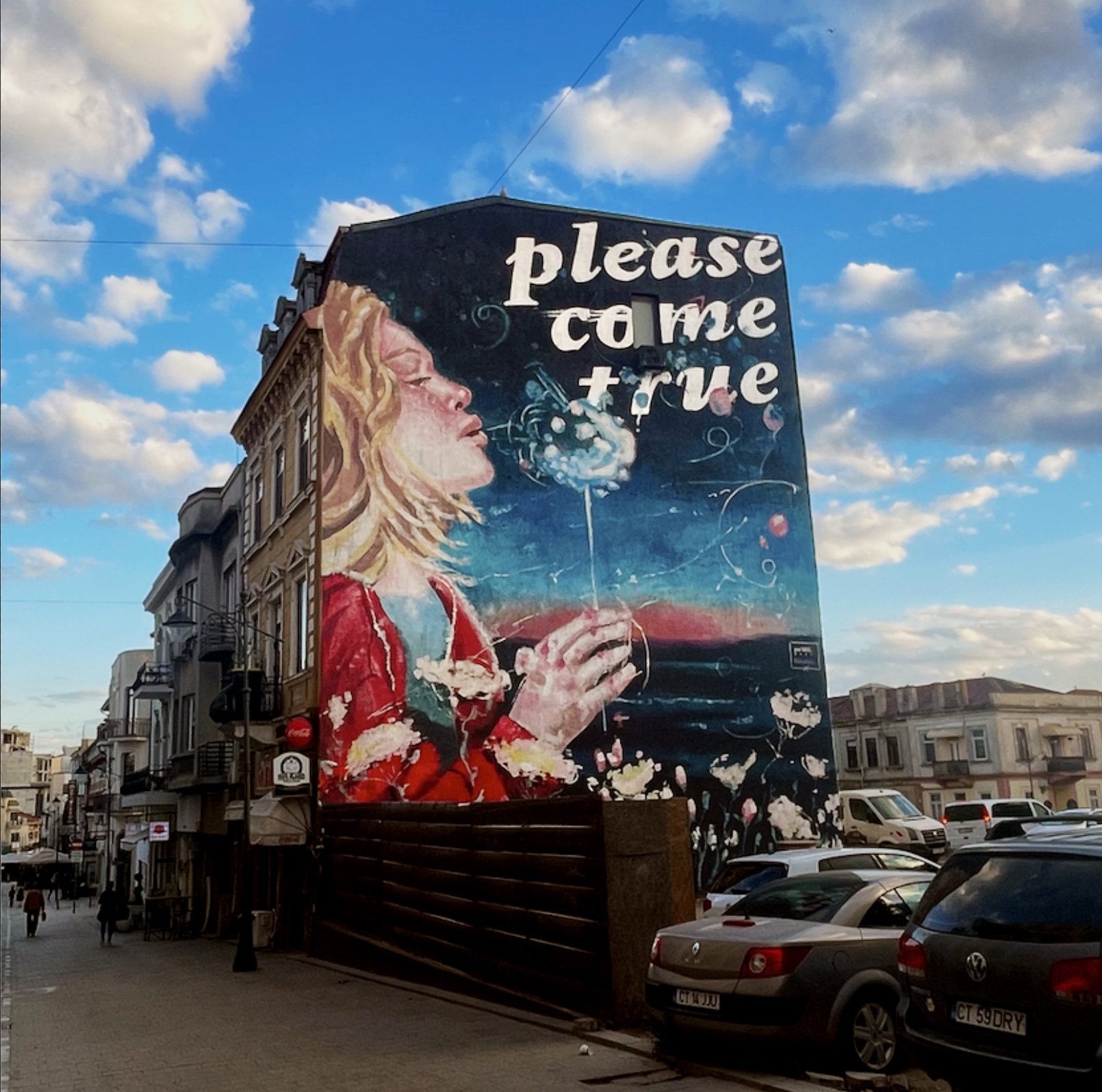
Wanda Hutira is one of those artists for whom the city is not merely a backdrop, but an active partner in dialogue. Using murals, illustrations, and experimental visual techniques, she creates images that respond both to their surroundings and to the stories of the people who live in them. Her works are often based on small observations of everyday life and social and psychological issues, while her unique technical experimentation—from "impressionistic" distortions created with a paint roller to typographical references—creates a unique visual language. With more than a hundred murals behind her, Wanda Hutira now not only paints pictures on walls, but also initiates quiet conversations between the city and its people.
Could you give us a brief introduction about yourself?
I’m Wanda, a multidisciplinary artist working mostly with murals, illustration, and various experimental mediums. I’m interested in how images and simple messages can change the way people experience a space, especially in cities where everything moves fast and walls often become just background noise.
I started drawing quite early, which eventually led me to study art in high school and later at the University of Art and Design in Cluj-Napoca. I spent about a decade working in advertising, which is a great place to learn how images persuade people. After a while I just wanted the conversations to happen somewhere other than PowerPoint.
Over the years I moved more and more toward murals and public art. I’ve created over a hundred murals across different cities and countries, often working with communities, organizations, and festivals. Many of my projects touch on themes like resilience, identity, or social issues, and sometimes involve collaborative workshops where people contribute ideas or even paint parts of the work themselves.
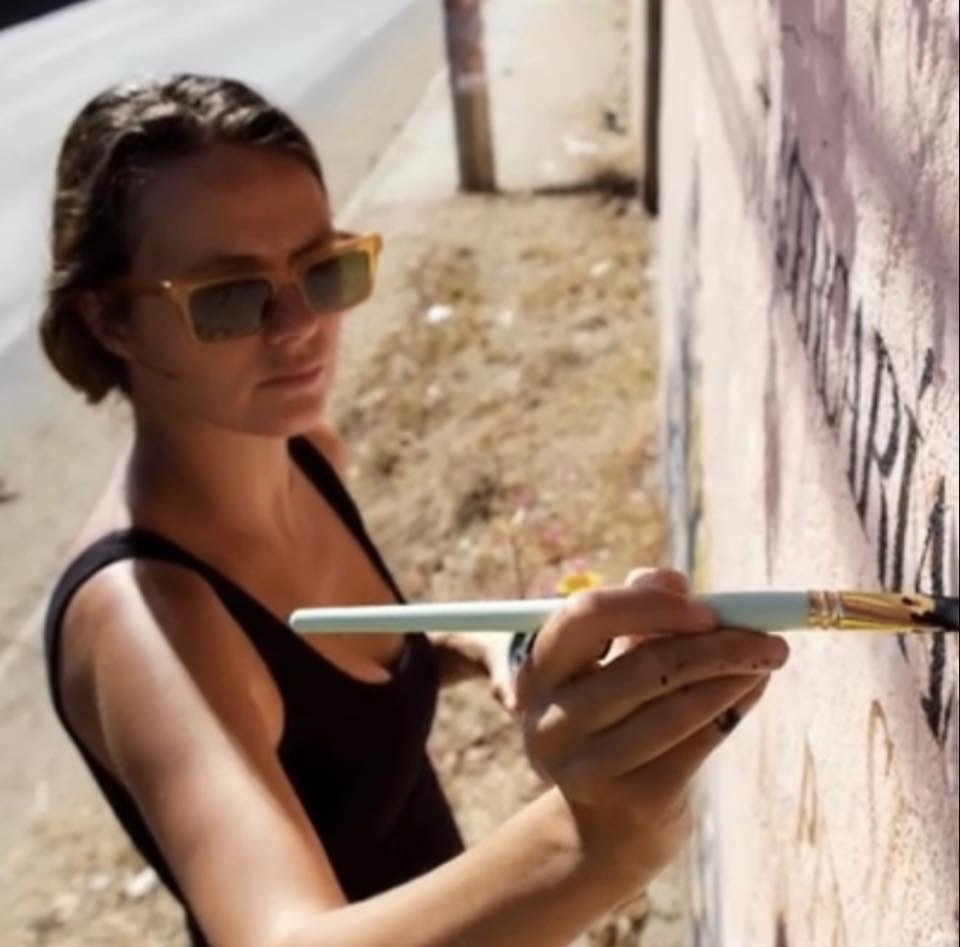
Alongside murals, I also work on editorial illustration, experimental projects, and occasionally in film or other collaborative contexts. What connects all of these is the same curiosity about storytelling and about how to open small conversations in public space.
My work is really about that — opening small conversations in public space.
I know my work won’t change the world overnight. At best, it might change a few minds. One. Two. Three. Who knows?
How did your style develop and how would you describe it?
My style developed through experimenting with tools that introduce a bit of unpredictability — scanners, photocopies, paint rollers, risograph printing and digital tools. I’m interested in the small distortions that happen when an image passes through different processes.
One direction that became central to my work is what I call paint roller impressionism. In classical Impressionism, painters explored light and color through visible brushstrokes. In my work, the roller creates a more contemporary version of that idea — distortions of light and color that feel closer to film stills or snapshot photography, slightly blurred, imperfect, caught in motion.
Probably the only art movement inspired equally by Hollósy and construction supply stores.
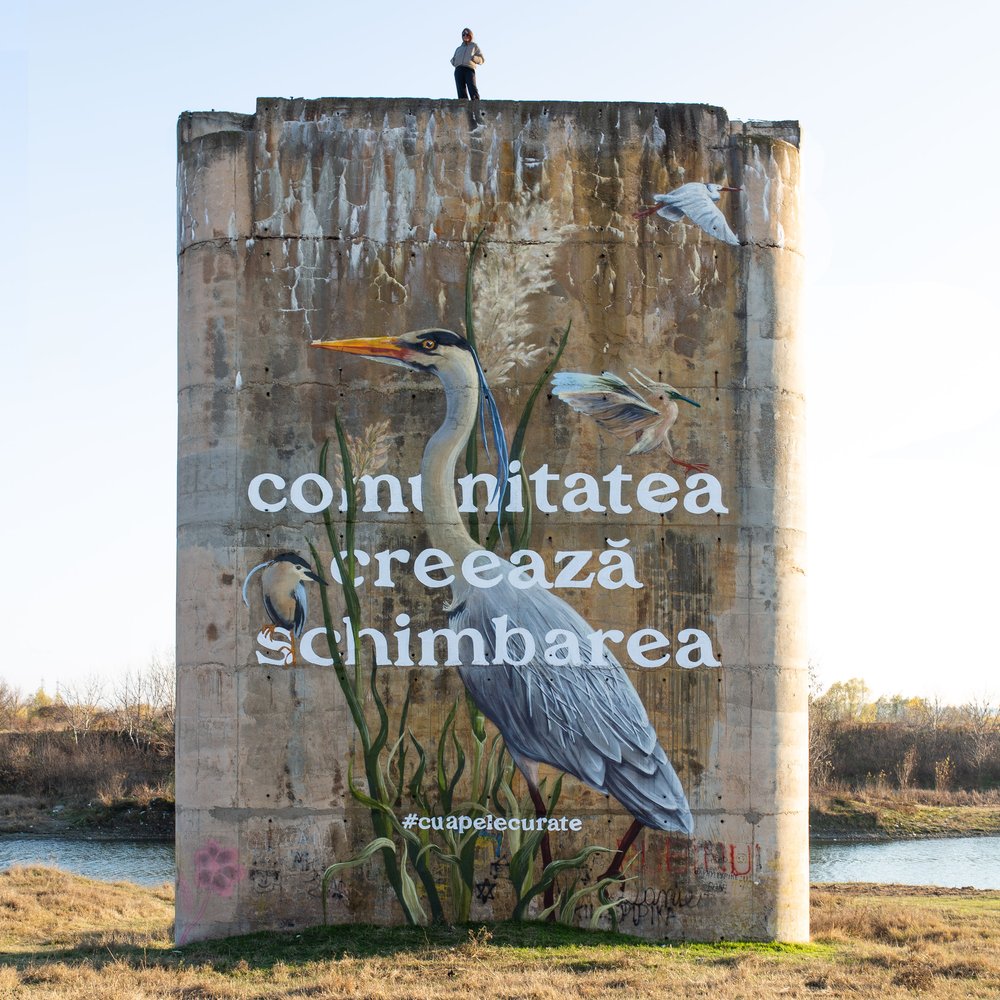
Typography is another important layer. Many of my letterforms are inspired by editorial design and printed media, especially classic typefaces like Janson Antiqua, often associated with the punchcutter Miklós Kis, who was born not far from my hometown.
Even though many works eventually become large murals, the process itself remains very analogue, which also feels like a distant and natural echo of the Impressionist tradition of Baia Mare, my hometown.
What does your creative process look like?
My creative process usually starts with a brief — sometimes from a client, sometimes from the context of a place. From there it moves into concept development and then the artwork itself. It is a very form-follows-function system.
The context of the wall often dictates the visual solution. Over time I moved away from spray cans and started working mostly with water-based paints and rollers, mainly because they have a much lower carbon footprint.
The painting style is also shaped by the realities of the urban environment. Many buildings are covered in polystyrene insulation and decorative plaster, often finished in pasteloza — an enthusiastic explosion of pastel colors that sometimes looks suspiciously inspired by used makeup removal pads. Cities have their own aesthetic surprises.
The heavier strokes and slightly low-resolution imagery work better with those surfaces and colors, so the aesthetic becomes a practical response to the architecture around it.
Painting murals also means negotiating scale with your body — ladders, rollers, long hours on a wall. The image becomes something you physically move through rather than something you simply draw.
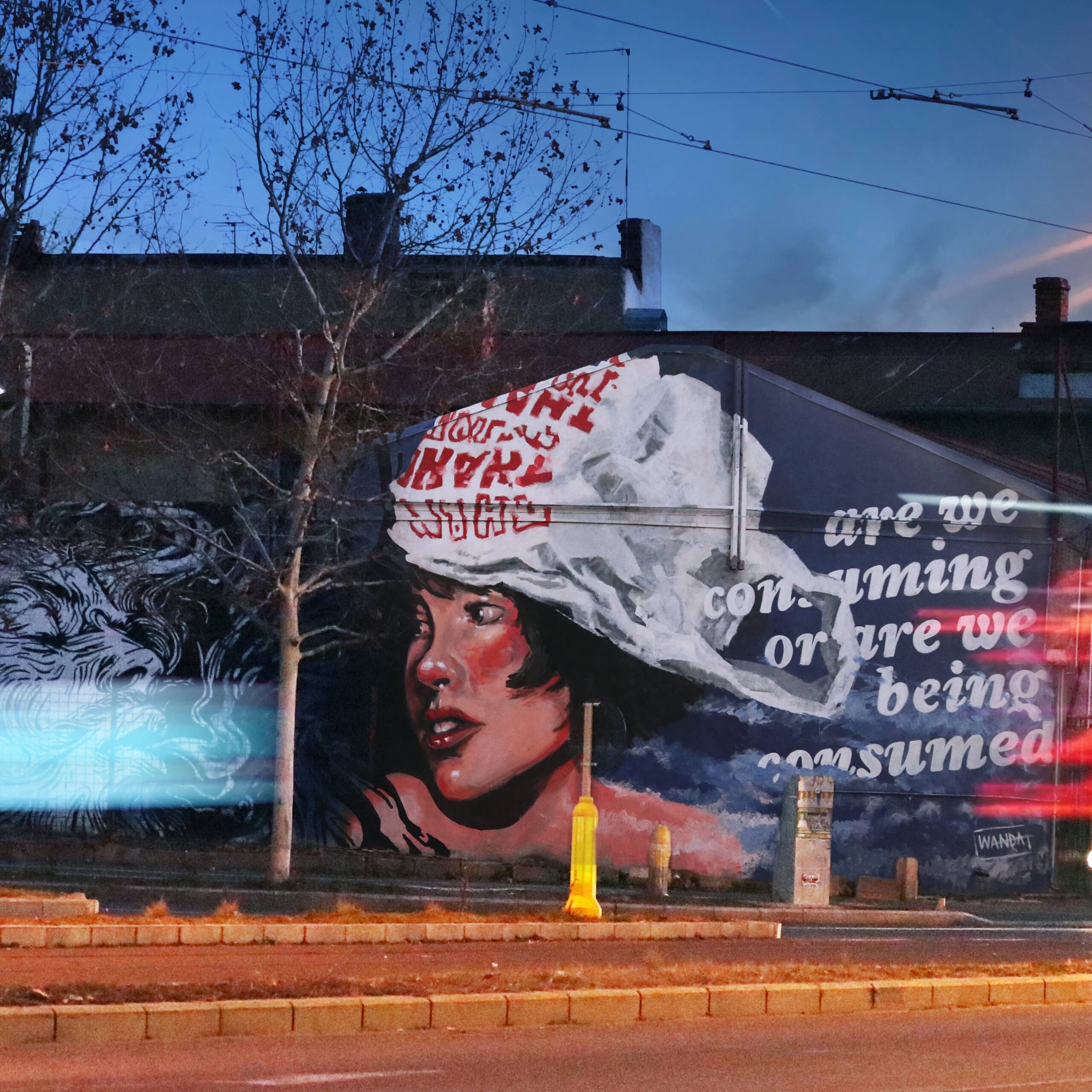
In that sense, the process is less about imposing a style and more about adapting the image to the wall, the story and the city itself.
And sometimes things fail. Some ideas look great on paper and behave very differently once they hit a wall. That’s part of the process too.
Where do you get most of your inspiration from?
Honestly, from everything. Literally everything. Humans are a very reliable source of strange behavior.
I’m very interested in the strange little things we do as humans: the habits, the gestures, the objects we carry around, the way we interact with each other without even noticing. A lot of inspiration comes from simply paying attention to those details.
I like romanticizing everyday life a bit. A random phrase overheard in a conversation, the way someone waits for the bus, a small awkward interaction between strangers, the objects people keep on their desks or in their pockets, a newspaper headline, the quiet routines that make up most of our days.

Those small observations often become the starting point for an idea. Sometimes they turn into images, sometimes into text, sometimes into a mural. It’s less about searching for inspiration and more about noticing what is already there.
What is your favorite topic?
Generally, I try to focus on topics that might create a small shift. Social, ecological, psychological things — the kind of issues most of us actually care about, but often don’t have the time or space to really think about.
Through my work I try to bring those subjects back into attention, even if just for a moment. A mural or an image won’t solve a problem, obviously, but it can act as a small reminder or a gentle push to notice something we usually overlook.
I’m interested in those quiet nudges — the kind that make someone pause for a second and maybe look at something a little differently.
Sometimes that’s already enough.
How do you see the current situation of subculture in Romania?
I think it’s evolving in a really nice way. Over the past few years there’s been a visible growth in independent initiatives, artist-run spaces, festivals, and communities that are building things from the ground up.
What I find interesting is that a lot of it happens outside traditional institutions. People organize events, exhibitions, concerts, and cultural platforms often with very limited resources but a lot of energy and collaboration. There’s also more dialogue between different scenes — visual art, music, street culture, design — which keeps things dynamic.
In the specific context of street art, it’s also very encouraging to see the scene slowly shifting from what used to be a very male-dominated environment toward something much more balanced. More women and non-male artists are visible, active, and shaping the conversation, which makes the whole scene richer and more interesting.
Of course there are still challenges, especially when it comes to funding and long-term infrastructure, but overall the scene feels alive, experimental, and increasingly connected.
What does street art mean to you? Do you see it as a hobby or a source of income?
It’s definitely both. It’s my profession and main source of income, but at the same time it still has the energy of a hobby — something I genuinely enjoy doing.
Some projects are commissioned murals, others sit closer to street art in the traditional sense. I enjoy moving between those worlds.
Street art sits in that strange space where passion and work overlap completely. On one hand, there’s that famous saying: do something you love and you’ll never work a day in your life.
On the other hand, when your passion becomes your job, you also start taking everything very personally. You obsess over details, you overthink projects, sometimes you develop a little anxiety around it.
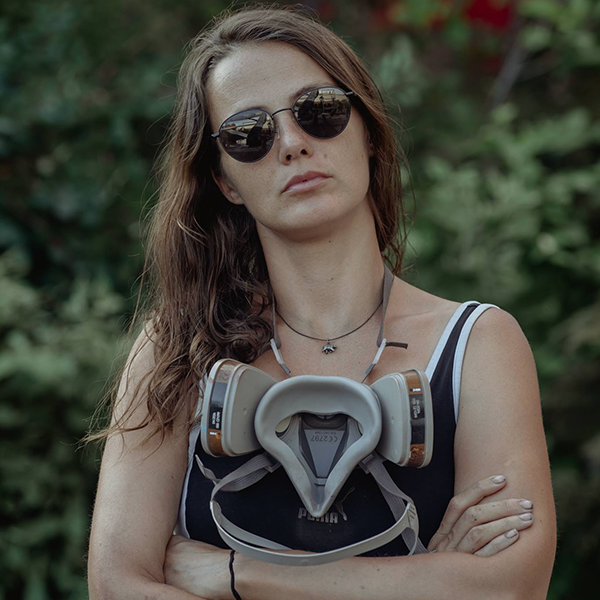
So it’s a mix. It’s work, deadlines, logistics and responsibility — but it’s also still the thing I would probably be doing anyway, even if it wasn’t my job.
If you weren’t involved in art, what profession would you choose?
Well, recent political developments sometimes make me consider if assassin could be a fair career option. No, I’m joking I wouldn’t do that. I’d probably become a forensic doctor just to cover my tracks.
Joke aside, I think I would still end up doing something hands-on and problem-solving. Maybe running an animal shelter, learning car mechanics, or opening a small print shop. I’ve always been curious about how things work and I enjoy learning practical skills.
Also, having ADHD means my interests tend to expand in unexpected directions. I’m the kind of person who suddenly dives deep into a new field just because it became fascinating overnight.
So honestly, I’m not sure what the alternative career would be — but I’m pretty certain it would still involve making, fixing, or building something.
I’m always surprising myself.
What is the most memorable story that happened to you while creating?
I don’t have a dramatic, life-changing story to confess here, so I’ll stick to a small moment that stayed with me.
It happened during my first year of painting murals. A little girl passed by with her grandmother and she became very fascinated by what I was doing. At some point she told her grandma that she also wanted to paint walls like this when she grows up.
Her grandmother was not impressed. She started explaining to the girl that if she became a house painter she would always look like a man, be covered in paint, and never be able to wear “proper girls’ clothes.”
The little girl thought about it for a second and then said something along the lines of: well, if there are already girls doing it, then you can’t say it’s only for boys anymore.
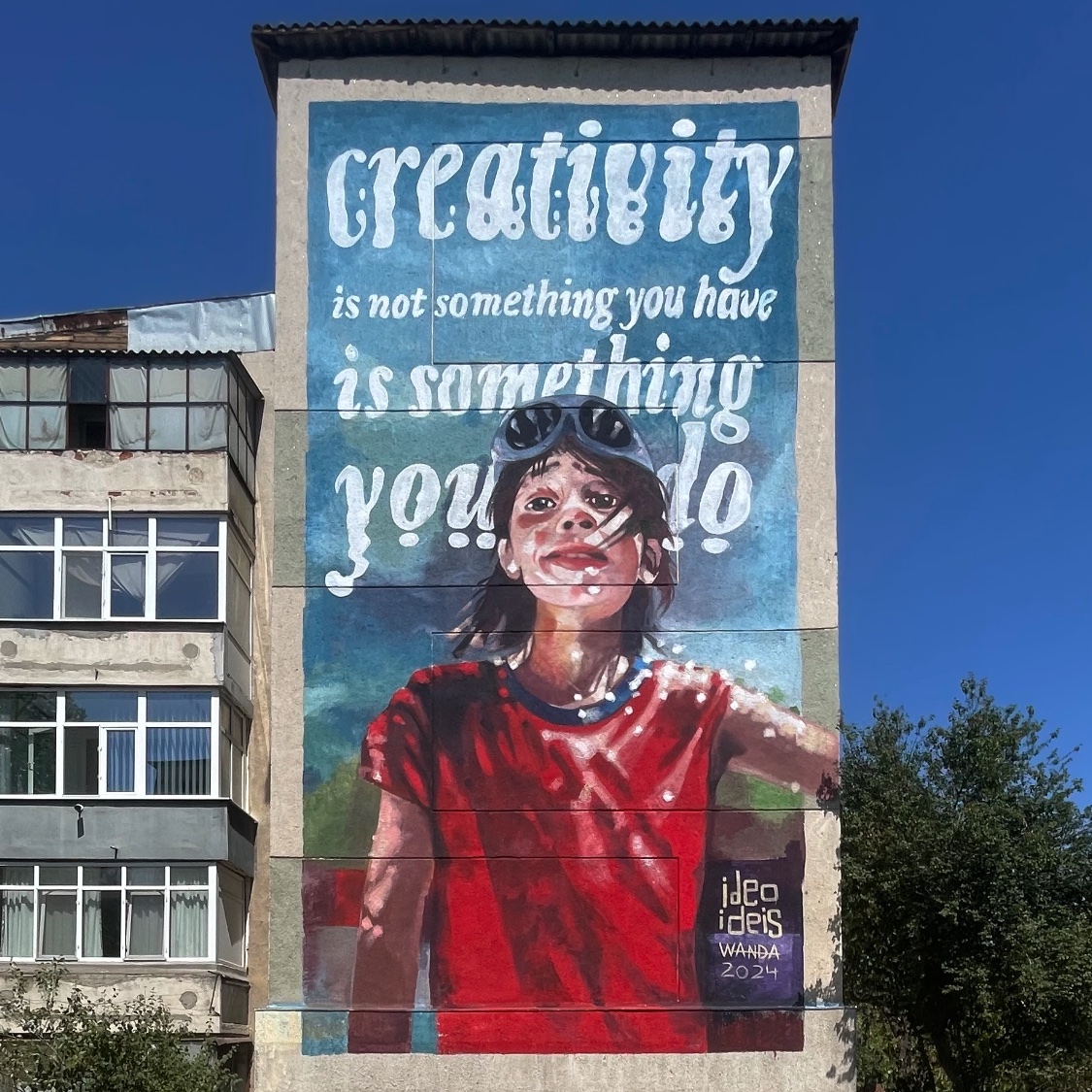
That small conversation stayed with me because it made me realize how important representation is. And ever since then I sometimes make a point of painting in a skirt or a dress — just to make it clear that those things are really not mutually exclusive.
What has this subculture given you over the years?
Experience. You know the saying: sometimes you win, sometimes you learn. I’ve definitely learned a lot.
Over the years it gave me the chance to travel, meet incredible people, and build friendships with artists and communities I probably would have never encountered otherwise. Being part of this scene changed the way I see cities and public space — you start noticing walls, stories, and possibilities everywhere.
It also taught me resilience. Working in public space means adapting constantly: to the wall, the weather, the context, the people passing by.
Murals also live with time. Unlike studio work, they slowly change with weather, pollution, and the rhythm of the city around them.
And maybe the most special part is the chance to interact directly with people while you’re creating. You’re not hidden in a studio — people stop, ask questions, share opinions, sometimes tell stories from their own lives. That direct dialogue with the street is something quite unique.
What message would you give to those who are just getting acquainted with the genre?
For those who are starting to make street art: keep doing it, especially when it becomes tough. That’s usually the moment when the interesting things start to happen. Sometimes things can be frustrating, but persistence is a big part of the process.
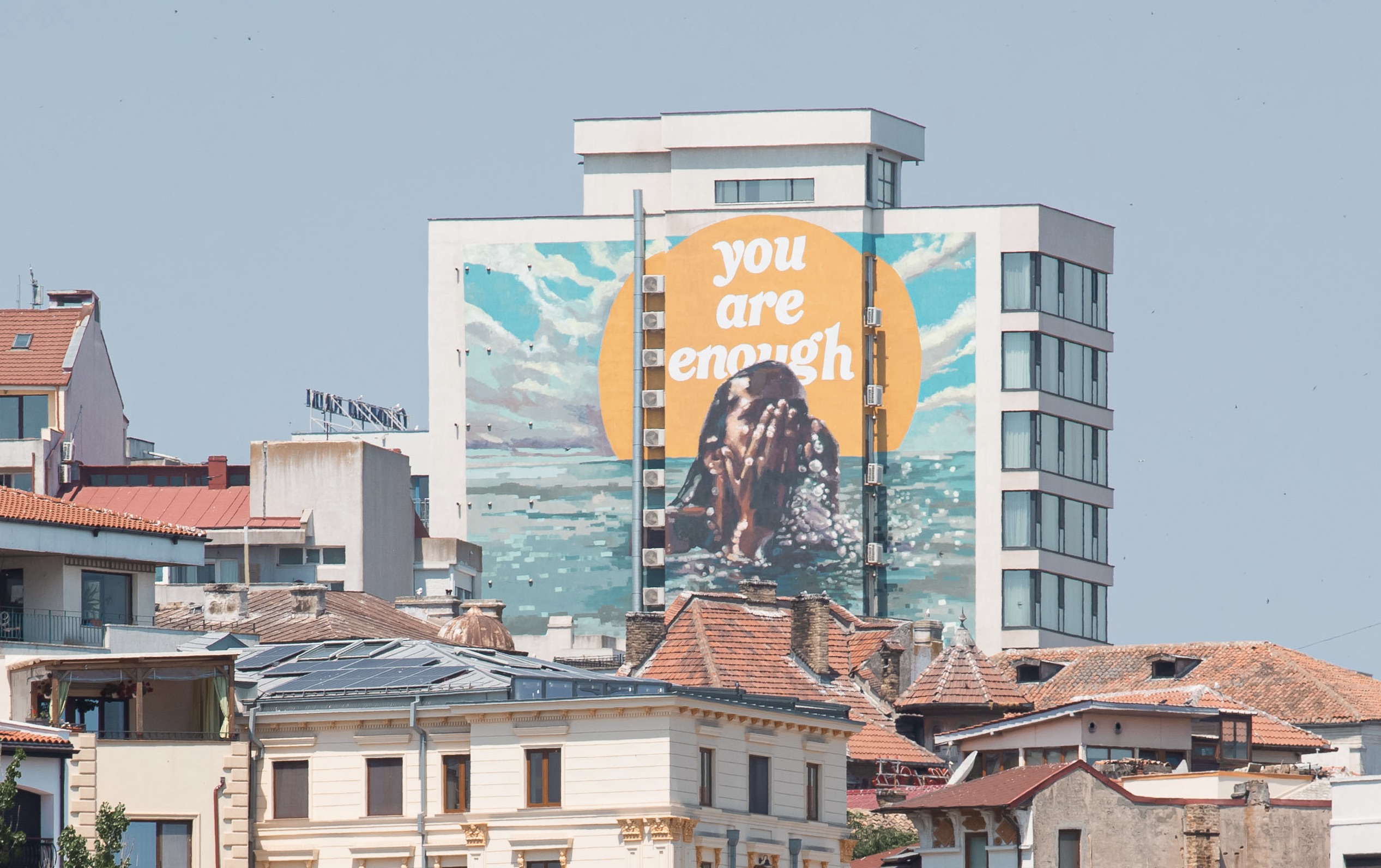
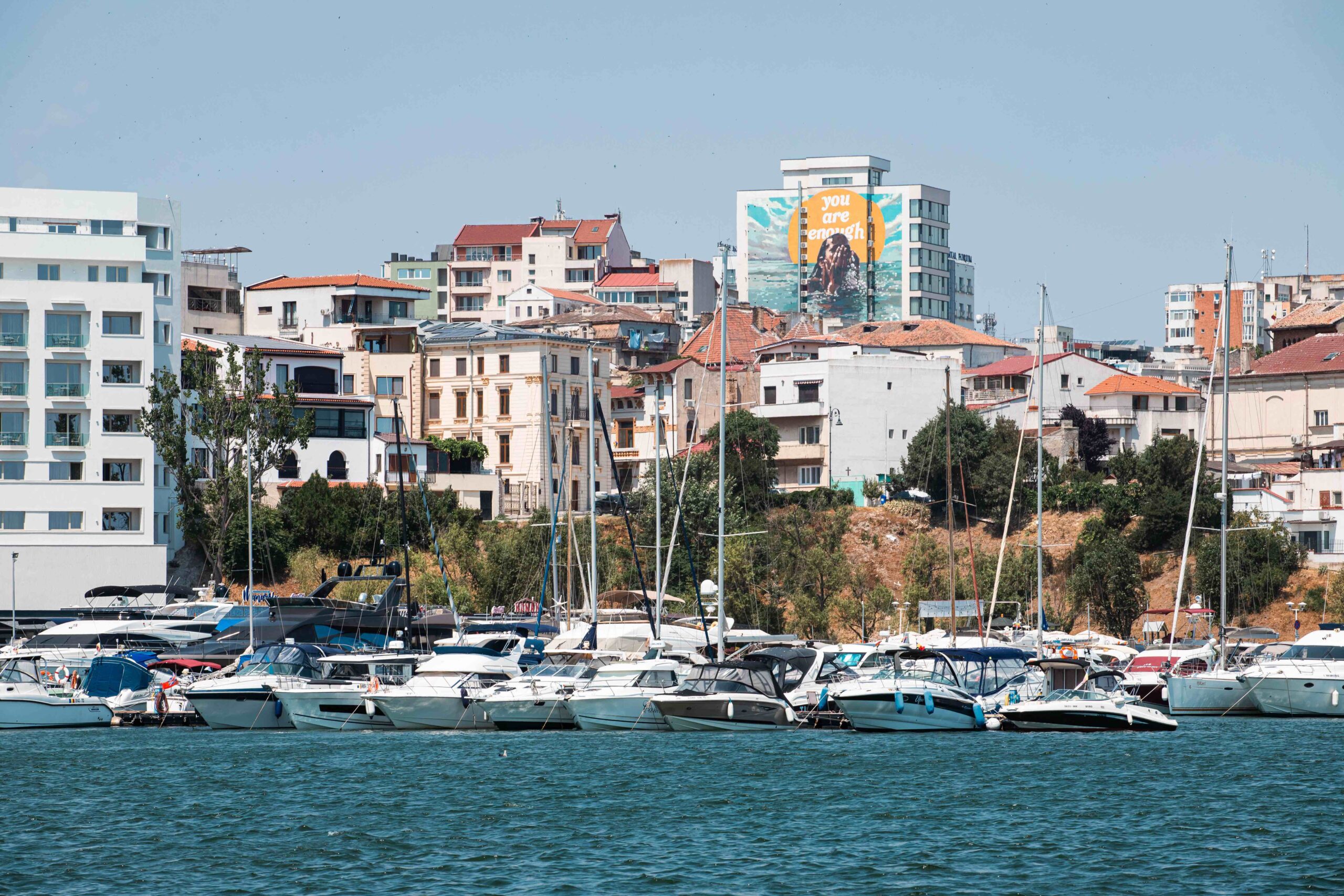
And for people who are just starting to explore and appreciate the genre: support artists in your local community. Artists who are still alive. Buy their work, follow what they do, help them keep going. Dead artists are already doing pretty well historically — the living ones are the ones who actually need the support.
What do you think street art can offer the world and people?
I think street art can first of all offer questions. Sometimes a bit of discomfort — the kind that quietly torments you with thoughts you weren’t expecting. Sometimes reflection, and occasionally a sense of balance.
Because it exists directly in public space, it becomes a very immediate way to communicate with people. You encounter it while going to work, walking the dog, waiting for the bus — it interrupts daily routines just enough to maybe make someone pause for a moment. Sometimes they love it, sometimes they hate it, sometimes they just ask why you’re painting someone’s wall instead of getting a “real job.”
Street art also says a lot about a city and the people living in it. In many ways it reflects the mood, concerns, humor, and tensions of that place. When you look at the walls of a city, you often get a pretty honest glimpse of what that community feels like as a collective.
Who would you thank for helping you stick with your art?
Honestly, my dogs.
They’ve been the backbone of my mental health over the past few years, and they’ve done a very good job at it. When you work in a field that can be quite unstable and emotionally demanding, having that kind of constant, uncomplicated presence helps more than people might realize.
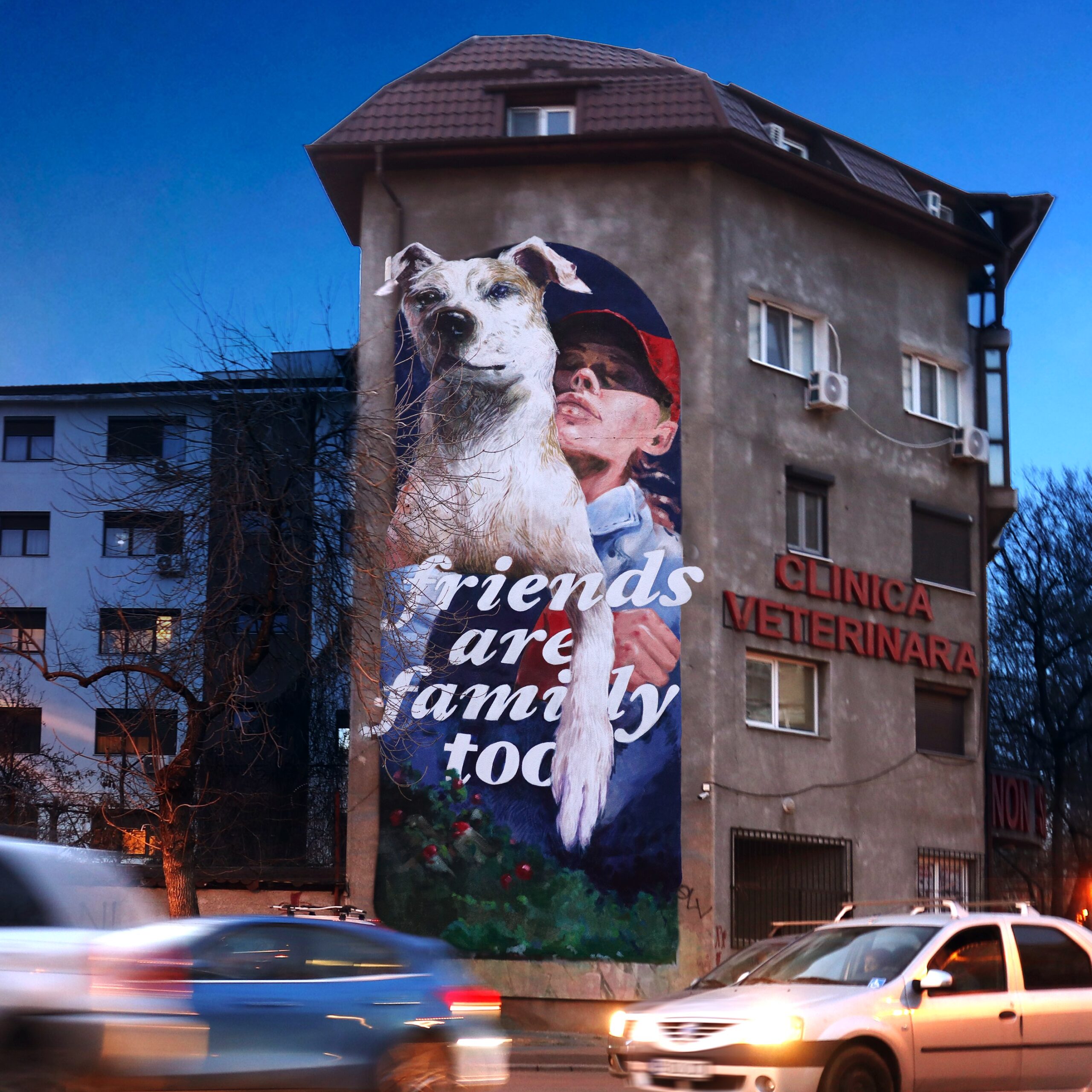
At the same time, they also made me much more aware of how animals are treated in different parts of the world. Once you experience that bond daily, it becomes very difficult to ignore the cruelty or neglect that animals often face.
They remind me every day that empathy is actually very simple — we just tend to complicate it.
Dogs figured that out a long time ago.
So yes — a big part of me continuing to do what I do is thanks to them.
Wanda's official website:
Wanda Hutira